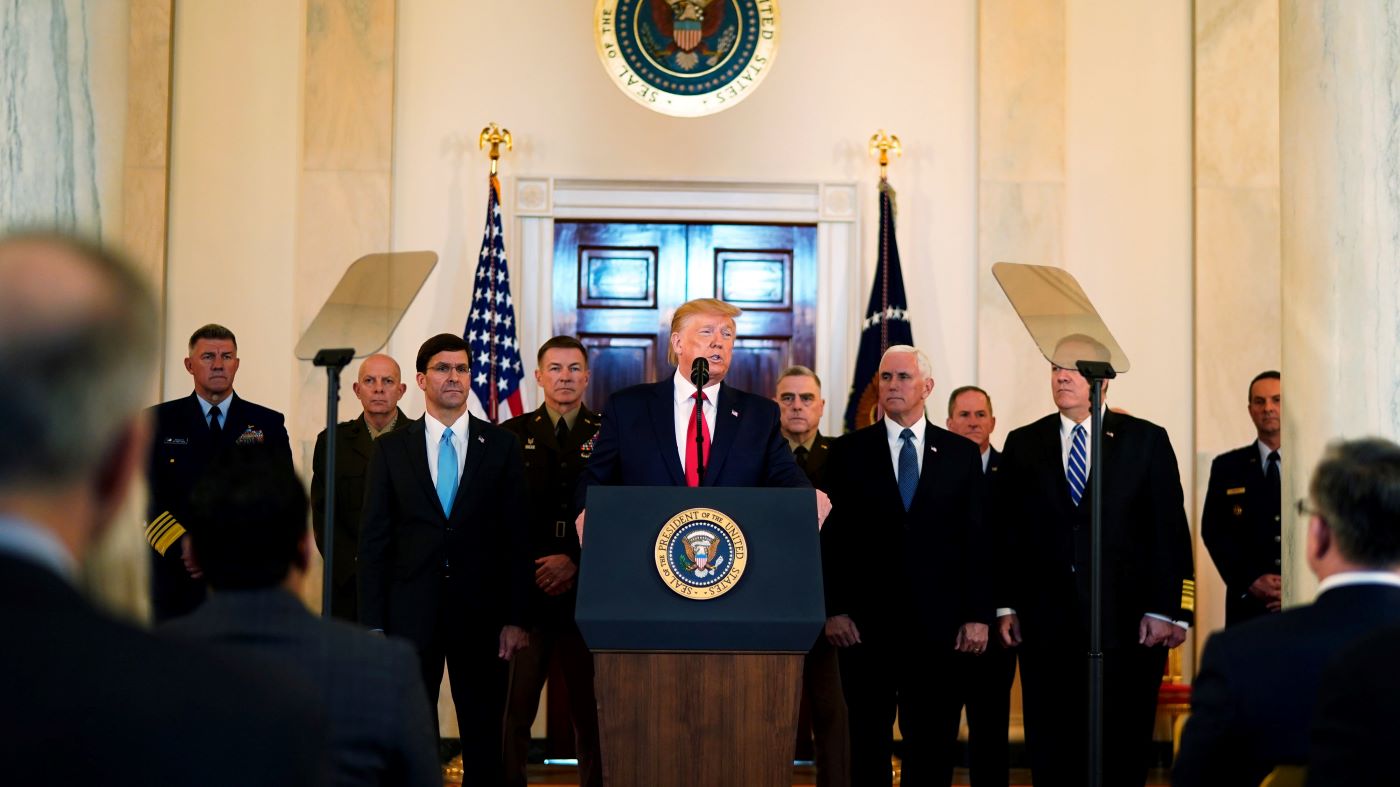
Donald Trump has said Iran is “talking to” the United States and suggested that an agreement could be reached to avoid military action.
“[Iran is] talking to us, and we’ll see if we can do something, otherwise we’ll see what happens. We have a big fleet heading out there,” Trump. “They are negotiating.”
He also said US allies in the region were not being briefed on any potential strike plans, citing security concerns. Trump has repeatedly warned of possible intervention in Iran following a deadly crackdown on anti-government protests.
“Well, we can’t tell them the plan. If I told them the plan, it would be almost as bad as telling you the plan, it could be worse, actually,” he said.
The comments came as Washington deployed a naval battle group led by the USS Abraham Lincoln aircraft carrier off Iran’s coast, a move announced after Trump threatened intervention over the protests.
The deployment has heightened fears of a direct confrontation, with Iran warning it would retaliate with missile strikes against US bases, ships and allies, including Israel, if attacked.
Despite the tensions, Trump said he believed Tehran would rather strike a deal on its nuclear and missile programmes than face US military action. Iran, for its part, has said it is prepared to engage in nuclear talks provided its missile and defence capabilities are excluded.
“Contrary to the hype of the contrived media war, structural arrangements for negotiations are progressing,” said Ali Larijani, head of Iran’s supreme national security council. His remarks came a day after the Kremlin said Larijani had met Russian president Vladimir Putin in Moscow.
Iranian president Masoud Pezeshkian echoed a conciliatory tone on Saturday, warning that a wider conflict would harm both sides.
“The Islamic Republic of Iran has never sought, and in no way seeks, war and it is firmly convinced that a war would be in the interest of neither Iran, nor the United States, nor the region,” he said during a call with Egypt’s president, Abdel Fatah al-Sisi, according to the Iranian presidency.
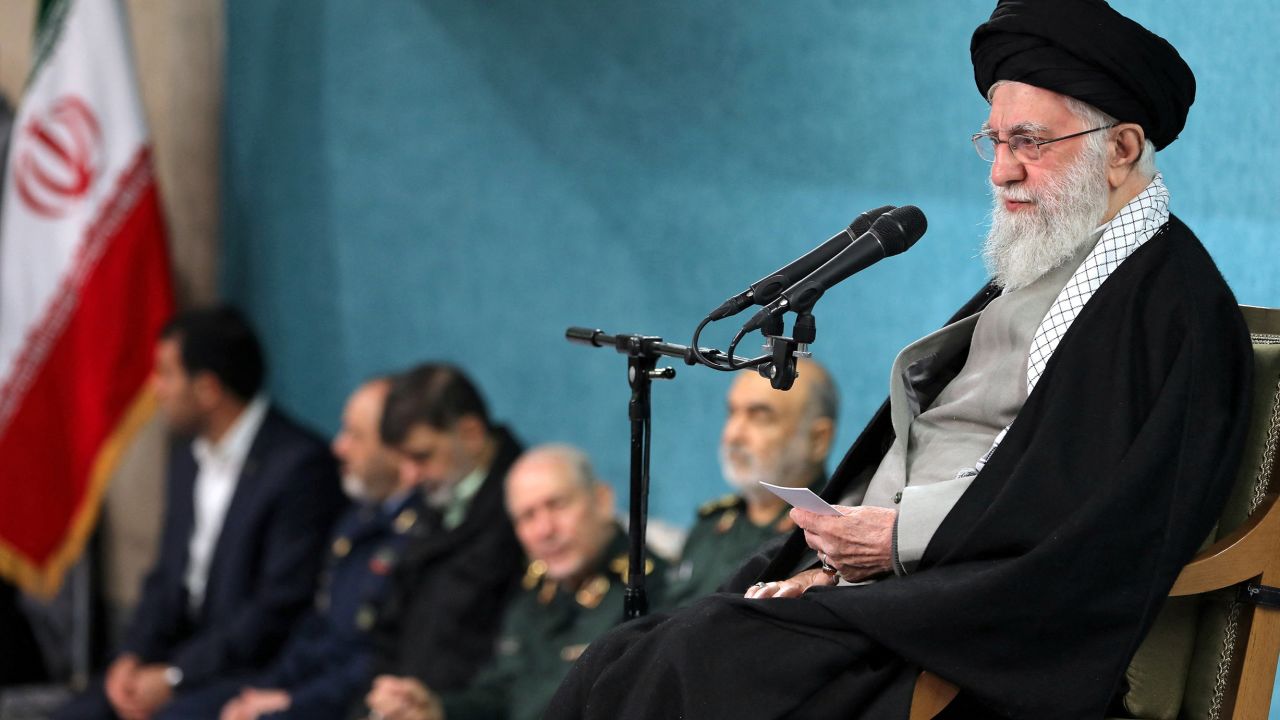
Earlier, Iran’s army chief, Amir Hatami, cautioned the US and Israel against any attack, saying Iran’s forces were “at full defensive and military readiness” to respond.
“If the enemy makes a mistake, without a doubt it will endanger its own security, the security of the region, and the security of the Zionist regime,” he said, according to state news agency IRNA. Hatami added that Iran’s nuclear technology and expertise “cannot be eliminated”.
Amid the rising tensions, Iranian officials moved quickly to deny that several incidents on Saturday were linked to attacks or sabotage. These included an explosion in the southern port city of Bandar Abbas, which local firefighters said was caused by a gas leak.
On Friday, US Central Command said Iran’s Revolutionary Guards would carry out “a two-day live-fire naval exercise” in the Strait of Hormuz, a critical route for global energy shipments. In its statement, the command warned Iran against “any unsafe and unprofessional behaviour near US forces”.
That warning drew criticism from Iran’s foreign minister, Abbas Araghchi. “Operating off our shores, the US military is now attempting to dictate how our Powerful Armed Forces should conduct target practice in their own turf,” he wrote on X.
The United States designated the Revolutionary Guards a terrorist organisation in 2019, a step the European Union followed on Thursday, prompting angry reactions from Tehran. The US also carried out strikes on key Iranian nuclear sites in June, briefly joining Israel’s 12-day war against Iran.
Nationwide protests over rising living costs erupted on 28 December before expanding into a broader anti-government movement that peaked on 8 and 9 January. Authorities described the unrest as “riots” and blamed the US and Israel.
The official death toll stands at 3,117, but the US-based Human Rights Activists News Agency says it has confirmed 6,563 deaths, including 6,170 protesters and 124 children.
On Saturday, Pezeshkian urged his government to address public grievances following the demonstrations and to “serve the people”.
Also Read: Justice Department Releases Epstein Files Under New Transparency Law