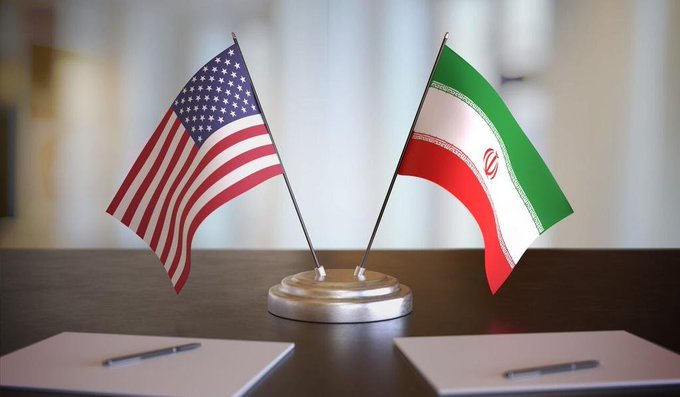
Iranian Foreign Minister Abbas Araghchi has said a nuclear deal is possible. The United States and Iran have agreed to resume nuclear negotiations in Oman on Friday, as President Donald Trump delivered a stark warning to Iran’s supreme leader, Ayatollah Ali Khamenei.
Iranian foreign minister Abbas Araghchi said the talks would begin at 10:00 local time (06:00 GMT) in Muscat, a detail later confirmed by US officials.
In recent days, the negotiations appeared to be at risk of collapse, with disagreements between Washington and Tehran over both the venue and the scope of the talks.
Trump has increased the US military presence in the region and has threatened force if Iran refuses to reach an agreement on its nuclear programme and continues killing protesters. When asked whether Khamenei should be concerned, Trump told NBC News on Wednesday: “I would say he should be very worried.”
“He should be. As you know, they’re negotiating with us,” he added. On Sunday, Khamenei warned that any US attack on Iran would ignite a “regional war”.
An Arab diplomat told the BBC’s US partner, CBS News, that negotiations between Tehran and Washington were never formally cancelled, but were unsettled earlier on Wednesday.
Three US officials also confirmed the accuracy of a report by Axios, which said the talks were revived later in the day after several Arab and Muslim leaders urged the Trump administration not to follow through on threats to abandon the process.
According to Axios, the administration agreed to proceed “to be respectful” to its allies, while remaining “very sceptical” about the likelihood of success.
Earlier, US Secretary of State Marco Rubio said at a news conference that special envoy Steve Witkoff had been preparing to meet Iranian officials in Turkey, alongside representatives from other regional powers, when the US received “conflicting reports” about Iran’s participation.
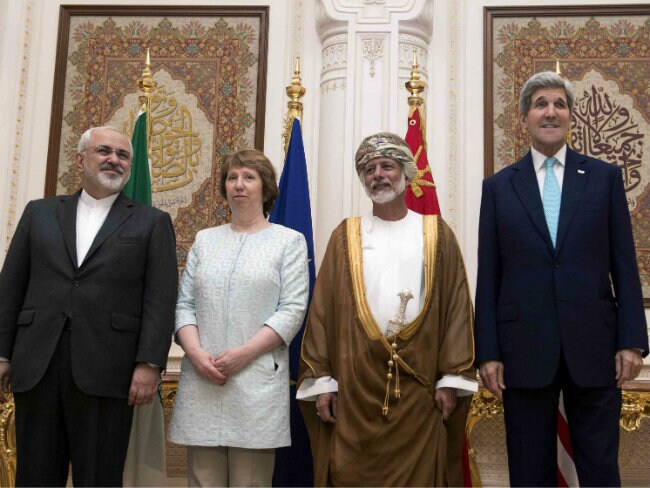
US and Iran Nuclear Negotiations
Rubio also stressed that if the talks were to “lead to something meaningful”, they could not focus solely on Iran’s nuclear programme, as Tehran has demanded.
“They will have to include certain things, and that includes the range of their ballistic missiles, that includes their sponsorship of terrorist organisations across the region, that includes their nuclear programme, and that includes the treatment of their own people,” he said.
On Sunday, Araghchi was asked whether Iran was willing to address reported US demands to curb its ballistic missile programme, halt support for proxy militias, and stop producing enriched uranium, which can be used for nuclear weapons as well as reactor fuel.
“President Trump said, ‘no nuclear weapons,’ and we fully agree with that. That could be a very good deal. Of course, in return we expect sanction lifting. So that deal is possible. Let’s not talk about impossible things,” Araghchi replied.
Iran has repeatedly said its nuclear programme is peaceful and has denied seeking to build nuclear weapons.
However, Trump said in his NBC interview that Iran was “going to have a nuclear weapon within one month” before he ordered US air and missile strikes on three major Iranian nuclear facilities during a 12-day war between Israel and Iran last June.
During that conflict, Israel also struck Iran’s nuclear sites and targeted nuclear scientists, senior military commanders, and parts of its missile arsenal.
Trump said the US strikes “obliterated” Iran’s uranium enrichment capacity, but added that Iranian officials “were thinking about starting a new site in a different part of the country”.
“We found out about it. I said, ‘You do that, we’re going to do… very bad things to you.’”
Trump also addressed Iranian protesters, saying that “we’ve had their back” following last month’s violent crackdown by Iranian security forces.
The protests began over the collapse of the national currency and sharply rising living costs, but quickly expanded into calls for political change.
The full extent of the violence remains unclear, in part due to an internet shutdown imposed by the authorities after the unrest escalated on 8 January.
The US-based Human Rights Activists News Agency (HRANA) said it has confirmed the deaths of 6,445 protesters, including 164 children, as well as 214 people linked to the government and 60 bystanders, and is investigating reports of a further 11,280 deaths.
Iranian officials have acknowledged that at least 3,117 people were killed, but said most were security personnel or bystanders killed by what they described as “rioters”.
Khamenei has characterised the unrest as “sedition” orchestrated by the United States and Israel.