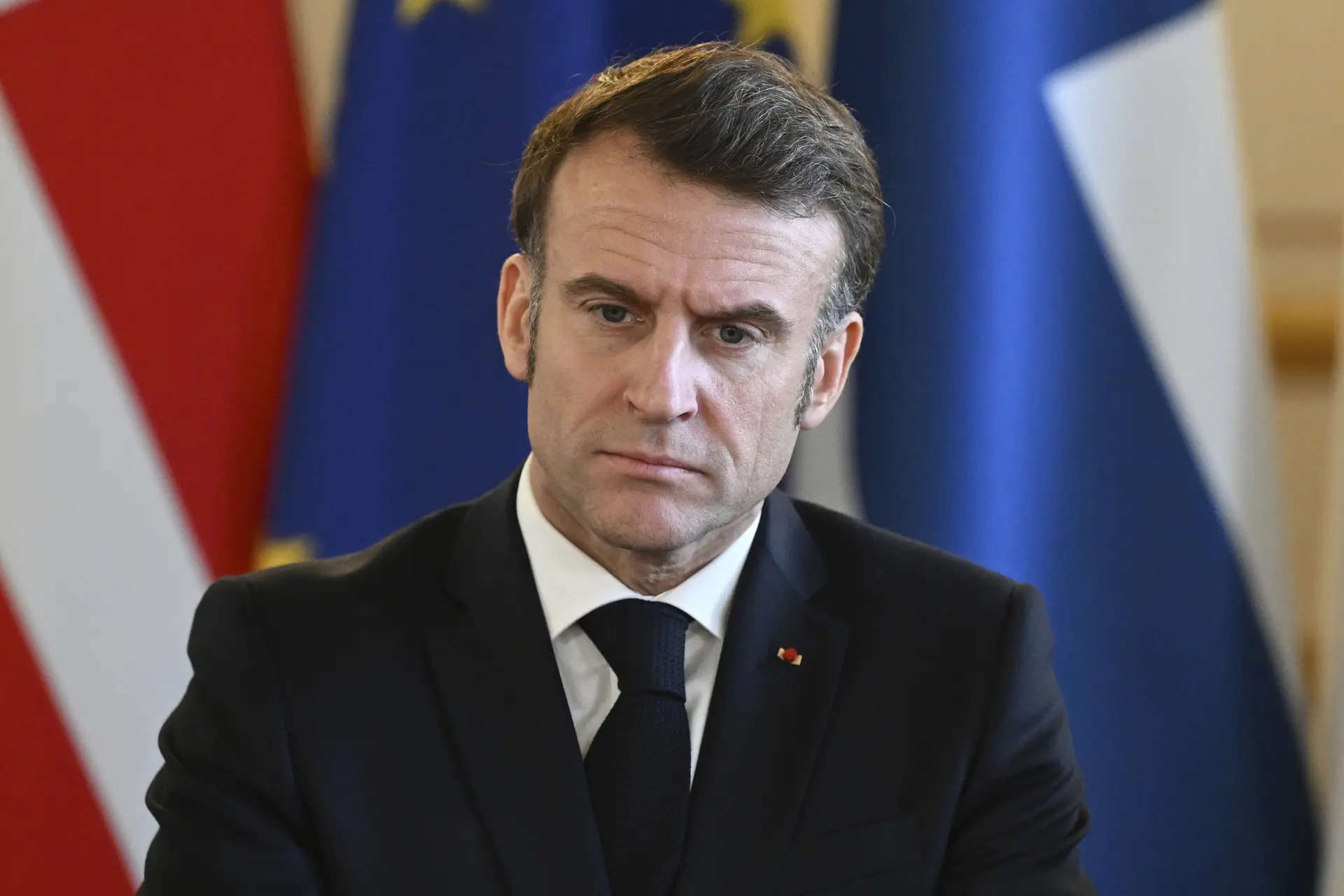
France has announced plans to expand its nuclear arsenal and extend its deterrent posture to additional European partners, marking a significant shift in national defense strategy.
President Emmanuel Macron outlined the changes during a speech in Brittany, describing them as a response to what he characterized as a deteriorating and unpredictable strategic environment.
“The next 50 years will be an era of nuclear weapons,” he said.
Addressing naval officers at the Île Longue base near Brest, with a nuclear submarine behind him, Macron confirmed that France would increase the number of nuclear warheads beyond the current estimate of approximately 300.
He also revealed that a new nuclear-armed submarine, to be named The Invincible, is scheduled to enter service in 2036.
Macron stated that eight European countries, the UK, Germany, Poland, the Netherlands, Belgium, Greece, Sweden and Denmark, have agreed to participate in what he described as an “advanced deterrence” strategy.
On X, Polish Prime Minister Donald Tusk referenced the decision, writing: “We are arming up together with our friends so that our enemies will never dare to attack us.”
Under the new framework, participating countries may join exercises involving France’s air-delivered nuclear capability, known as the force de frappe. They could also host air bases where French nuclear-capable aircraft would be stationed.
Such deployments would enable France’s Strategic Air Forces (FAS) to “spread out across the depth of the European continent… and thus complicate the calculations of our adversaries”, Macron said.
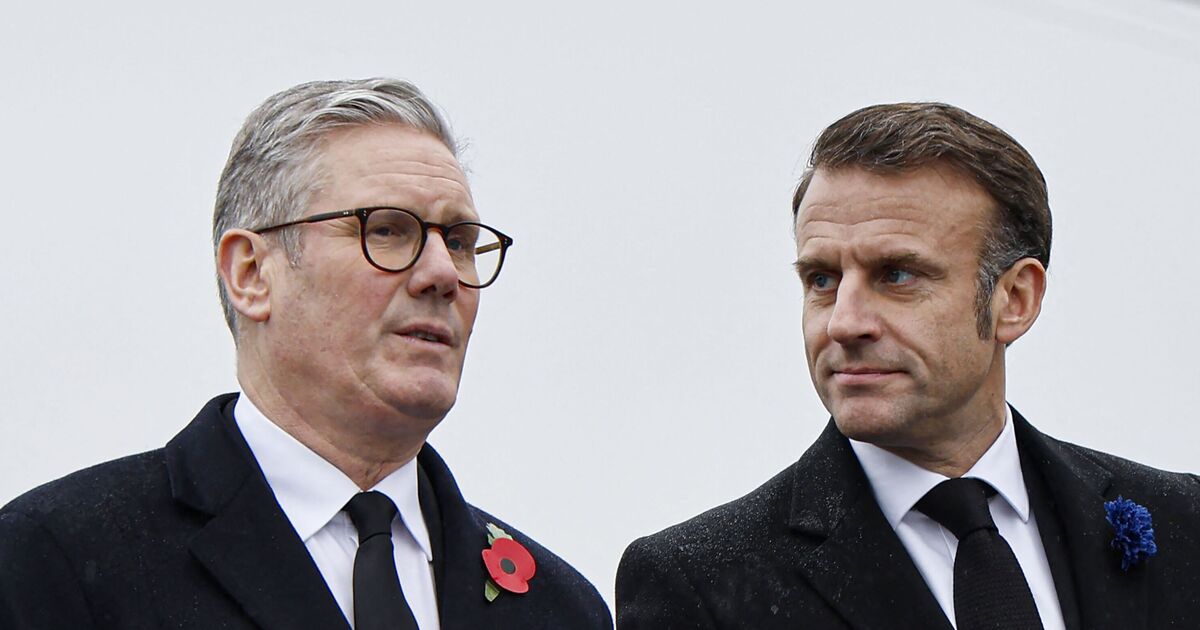
Kier Starmer and Emmanuel Macron
France’s partners would also contribute to developing “auxiliary” capabilities aligned with the revised doctrine. These include space-based early warning systems, air defense designed to intercept drones and missiles, and long-range conventional missile systems.
Officials have described the policy shift as the most consequential evolution in French nuclear strategy since 1960. Nevertheless, the new “advanced deterrence” model maintains core elements of the doctrine originally shaped under President Charles de Gaulle.
There will be no formal or automatic nuclear guarantee extended to partner nations. Ultimate authority over the use of nuclear weapons will remain exclusively with the French president.
The foundational objective, Macron emphasized, remains unchanged: to persuade potential adversaries that “if they have the audacity to attack France… there will be an unsustainable price to be paid.”
France has historically maintained deliberate ambiguity around what constitutes its “vital interests”, the threshold at which a nuclear response would be triggered.
While recent governments have suggested that these interests could encompass broader European concerns, the new doctrine provides a more structured framework without explicitly defining red lines.
Consistent with deterrence theory, Macron also announced that France will no longer publicly disclose the number of nuclear warheads in its arsenal.
France already maintains a cooperation agreement with Europe’s other nuclear-armed state, the United Kingdom. In recent developments, UK officials participated for the first time in exercises conducted by France’s Strategic Air Forces.
Following Macron’s address, France and Germany jointly unveiled plans for expanded bilateral coordination on nuclear deterrence.
The two governments, represented by Macron and German Chancellor Friedrich Merz, confirmed that initial steps would be taken this year. These include German participation in French nuclear exercises and the advancement of conventional capabilities in collaboration with European partners.
Both leaders emphasized that this initiative is intended to complement, rather than replace, NATO’s existing nuclear deterrent framework.