India has long had practices rooted in sustainability through its cultural and traditional ways. However, in the pursuit of modern growth and economic transformation over recent decades, that focus has often taken a backseat.
With renewed international pressure and collaborative global engagement, there is now fresh momentum. India’s actions on sustainable development have gathered new energy and are now progressing at a pace that shows clear intent to lead by example.

India blends ancient wisdom with modern ambition on climate action (Photo: Getty Images)
Steps Being Taken Towards Carbon Neutrality
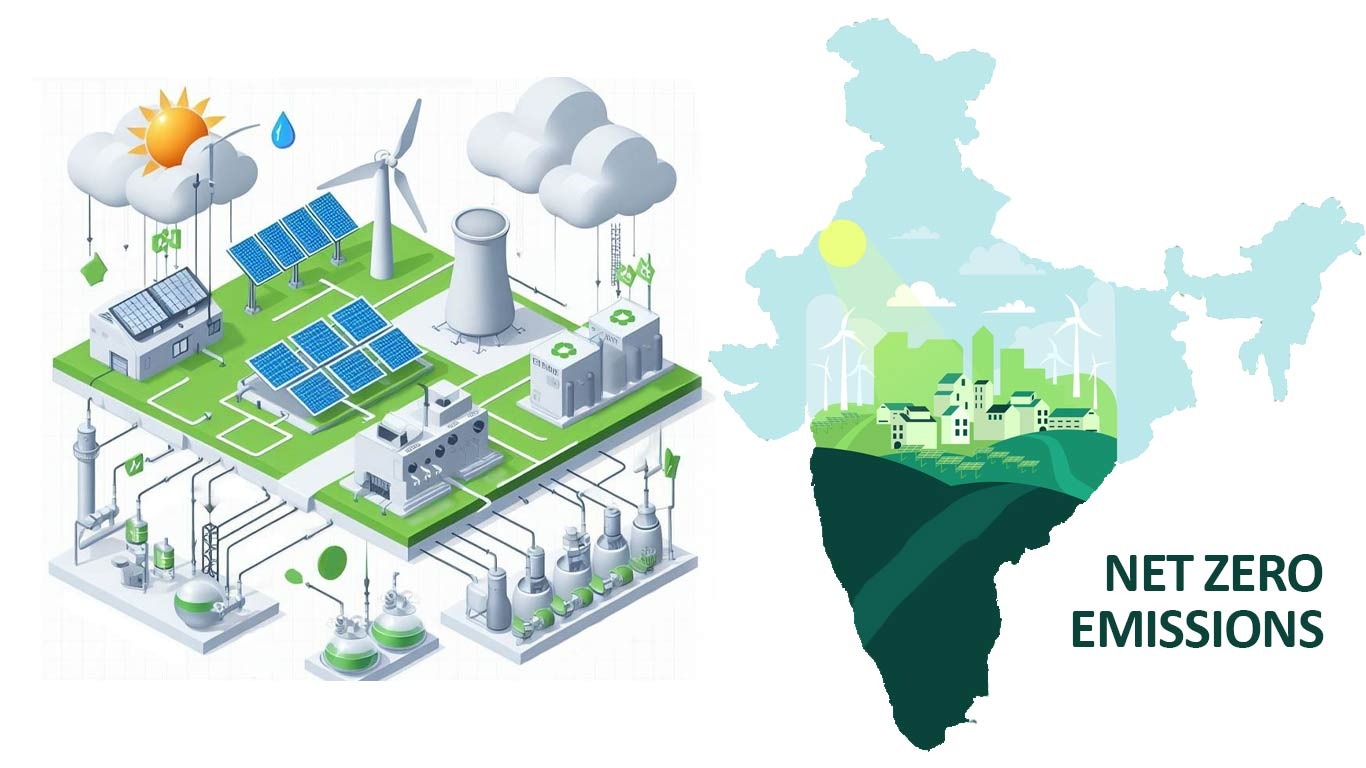
India made a major declaration at the COP 26 gathering held in Glasgow. The Prime Minister, Mr. Narendra Modi, stated the country’s intention to reach net zero carbon emissions by the year 2070.
This pledge is part of the broader Panchamrita climate strategy, which sets out multiple goals to be achieved by 2030. These cover several key areas: increasing the capacity for non–fossil fuel energy, boosting the share of renewables in energy use, cutting back on carbon intensity, and ensuring widespread implementation of emission reduction strategies across industrial operations.
To support this plan, India has adopted several national initiatives designed to cut greenhouse gases and simultaneously encourage environmentally friendly economic growth. Key programmes include:
- The National Action Plan on Climate Change, featuring eight missions that tackle various climate aspects such as energy efficiency, solar power, water conservation and sustainable agriculture.
- Mission Innovation, an international collaboration meant to boost research and investment in clean energy technologies while generating green jobs.
- The National Solar Mission, which has targeted 100 gigawatts of solar capacity through strong policy backing.
- Wind power initiatives, which receive government assistance through various incentive programmes.
- Bioenergy support, through regulations and financing aimed at using biomass and biofuels effectively.
India’s financial regulatory body, SEBI, has introduced updated disclosure rules to strengthen climate accountability in corporate reporting. This push is driving India’s largest 1,000 companies to publicly share their carbon reduction commitments. The majority have responded positively and begun working toward implementation, often guided by internal ESG frameworks.
The country’s Finance Minister, Ms. Nirmala Sitharaman, has also pressed for the adoption of such standards by Indian firms, including those within the Fortune 500 group. The focus remains on making Indian industries more transparent and aligned with sustainable expectations.
Widening Support and Urban Sustainability Measures
With cities growing quickly, India expects around 37% of its people to live in urban areas by 2030, contributing nearly 70% of the national GDP. This brings fresh urgency to making sure urban growth happens in a low-carbon and environmentally sound manner.
Programmes like the National Urban Policy Framework and Pradhan Mantri Awaas Yojana now incorporate sustainable ideas around clean energy, water systems and infrastructure design.
The building industry in India has started to adopt more climate-conscious practices. By 2023, India ranked third globally for the number of buildings following LEED green building standards, a reflection of how developers and policymakers are beginning to adapt to climate goals.
The Energy Conservation Building Code (ECBC), first released in 2007 and updated in 2017, set specific guidelines for energy-efficient construction. States have been creating ECBC cells to drive awareness and help enforce compliance.
A broader version, now referred to as the Energy Conservation and Sustainability Building Code (ECSBC), is in development. This updated version looks at areas beyond just electricity use. It includes waste disposal, water use, site planning and indoor conditions.
In addition to the ECSBC, India also released the Eco Niwas Samhita (ENS 2024), which is tailored to residential buildings. These moves reflect a deliberate effort to reduce the carbon footprint across building types.
The transition to net zero is gaining appeal among professionals in real estate and construction. Life cycle assessment (LCA) is increasingly used to assess and manage the environmental impacts of buildings over time. These assessments assist in measuring embodied carbon and help businesses plan more sustainable building projects.
LCAs provide necessary insights when looking to develop net zero designs. They influence decisions about energy use, construction materials, and site operations, playing an important role in securing long-term energy savings and reducing emissions from buildings.
There are various reasons why net zero buildings are being promoted: they lead to energy efficiency, better air quality, financial benefits, and resilience in the face of environmental changes. Properties that meet such standards are more attractive to modern occupants and investors who are conscious of their environmental impact.
A Real-Life Project Implementing Net Zero Strategies
An office development located in Chennai, Tamil Nadu, provides an example of a large commercial property working toward carbon neutrality. With nearly 60,000 square metres of built-up space, the project team conducted a detailed LCA using the OneClick tool to understand the environmental effect of materials and construction choices.
Their analysis centred on core and shell materials, which account for more than 95% of the project’s entire building components. It revealed 499 KgCO2e per square metre in carbon emissions. To reach net zero, the project adopted changes that reduced these figures. These included choosing low-emission building materials, limiting material waste, and prioritising recycled content.
Operational Emissions and Energy Performance
This particular office building has a conditioned space measuring 36,332 square metres. The structure includes three basement levels, a ground floor and 13 additional floors. Being in a warm and humid region of India, the project required energy strategies tailored to this climate.

Corporate giants in India step up to meet emission targets (Photo: Shutterstock)
To estimate energy-related emissions, the team carried out energy modelling using a digital version of the building. This included simulations of lighting, wall insulation, ventilation systems, and more. Real-time weather and location data were factored in to estimate annual power demand.
Here is what they found:
- Building envelope: The walls, roof, and windows were designed to reduce heat transmission, improving thermal comfort and cutting cooling costs.
- Lighting system: Advanced lighting design, including motion sensors and daylight control, kept energy use low across work areas and parking spaces.
- HVAC system: The air-conditioning set-up included high-efficiency chillers, energy recovery systems and variable-speed fans to reduce electricity needs.
The completed design achieved an energy performance index of 86 kilowatt-hours per square metre. For comparison, using the ASHRAE 90.1.2010 energy code as a baseline showed an index of 117. This means the building consumes about 26% less energy than required under standard codes.
The remaining energy needs are addressed through on-site renewable energy sources and additional support from off-site clean power investments. This ensures the building maintains its net zero carbon goal.
To maintain lower carbon intensity across the long term, India is now paying closer attention to city-level planning, smarter resource usage, and climate-responsive architectural design. There is also increasing focus on improving how towns manage water, sewage and waste services using efficient technologies.
The most pressing challenge facing our generation remains climate change, which affects every part of life today. Addressing this requires action from every level of society. Achieving net zero is no longer just an ambition—it is the route toward building a cleaner and better tomorrow.