
Indian cinema has undergone tremendous change and growth over the last century. The industry has evolved from a small, experimental venture into a global powerhouse that commands attention worldwide.
Indian cinema has shaped the cultural identity of the country while simultaneously gaining recognition in the global film industry. This transformation reflects the changes within India itself, such as its social, political, and economic growth, and how the film industry has mirrored these changes.
From its humble beginnings, Indian cinema emerged as a reflection of the country’s diverse culture, offering stories that resonated with the masses. Early Indian films were influenced by theatre and music, showcasing intricate performances and elaborate sets.
The transformation of Indian cinema mirrors the country’s cultural growth (Photo: Twitter)
Over time, the content and form began to expand, incorporating more modern elements and techniques. The 1950s and 1960s marked a turning point in Indian cinema, with filmmakers focusing on stories rooted in Indian society while introducing artistic innovation.
The emergence of the commercial film industry, also known as Bollywood, brought new energy to the scene, with larger-than-life stories that captured the imagination of the masses. Bollywood films are now known for their music, drama, and larger-than-life characters, which are often a hallmark of Indian storytelling. Over the years, this style of filmmaking has attracted international attention and has grown to become an important part of global pop culture.
Early Beginnings: The Silent Era
The history of Indian cinema traces back to the early 20th century when Dadasaheb Phalke released Raja Harishchandra in 1913. This was India’s first full-length feature film, and it marked the beginning of the country’s cinematic journey.
At the time, films were silent, relying heavily on physical gestures and visual storytelling. Indian cinema during this period faced many challenges, including limited resources and the absence of sound, which made the craft of filmmaking both challenging and innovative.
Films during this era often drew inspiration from mythological tales, folklore, and historical epics, which resonated with the Indian audience. The silence of the films was not a barrier but rather a creative challenge, with directors experimenting with techniques like dramatic visuals and elaborate set designs. The silent film era laid the groundwork for the future development of Indian cinema.
The Advent of Sound: The Golden Age
With the arrival of sound in the 1930s, Indian cinema experienced a revolution. The first Indian sound film, Alam Ara (1931), was a major milestone in the industry’s evolution. It introduced dialogue and music, two critical elements that would define Indian cinema for decades.
The 1940s and 1950s are often considered the “Golden Age” of Indian cinema, during which Bollywood saw the rise of legendary filmmakers, actors, and musicians who crafted timeless classics.
During this period, Indian films started to develop their unique style, blending music, dance, drama, and rich storytelling. Directors like Raj Kapoor, Guru Dutt, and Mehboob Khan became household names, and films like Mother India (1957) became international sensations. Music also played a pivotal role in Indian films, with playback singers like Lata Mangeshkar and Kishore Kumar becoming icons.
Bollywood’s Rise to Fame
By the 1970s, Bollywood had solidified its position as the dominant force in Indian cinema. The decade saw the rise of action films, with stars like Amitabh Bachchan becoming the face of the industry. These films often dealt with themes of heroism, justice, and social change, reflecting the larger political and social movements occurring in India during that time.
The 1980s and 1990s marked another change, with Bollywood films embracing a more glamorous and commercialized style. Movies became larger in scope, with lavish sets, elaborate dance sequences, and more sophisticated storylines. The rise of the “stars” became even more pronounced, and Bollywood became known for its star-driven culture.
The Influence of Technology and Globalization
The turn of the century brought about a new era for Indian cinema, one that embraced technological advancements. Digital technology transformed filmmaking, allowing for greater creativity and efficiency. The 2000s saw the rise of more diverse genres, with filmmakers experimenting with independent cinema, art films, and even international collaborations.
Globalization played a crucial role in the growth of Indian cinema, with Bollywood films reaching audiences in new markets, especially in the West. The rise of the internet and platforms like YouTube allowed Indian filmmakers to showcase their work to a global audience. Filmmakers began to experiment with more diverse themes, including social issues, and Indian films began gaining recognition at international film festivals.
A New Wave: Indie and Regional Cinema
While Bollywood remains the most well-known part of Indian cinema, regional films from Tamil, Telugu, Kannada, Bengali, and other industries have seen a surge in popularity. In the last two decades, regional films have gained recognition for their unique storytelling and powerful performances. Directors like S. S. Rajamouli, who made the Baahubali series, have pushed the boundaries of Indian filmmaking and achieved worldwide success.
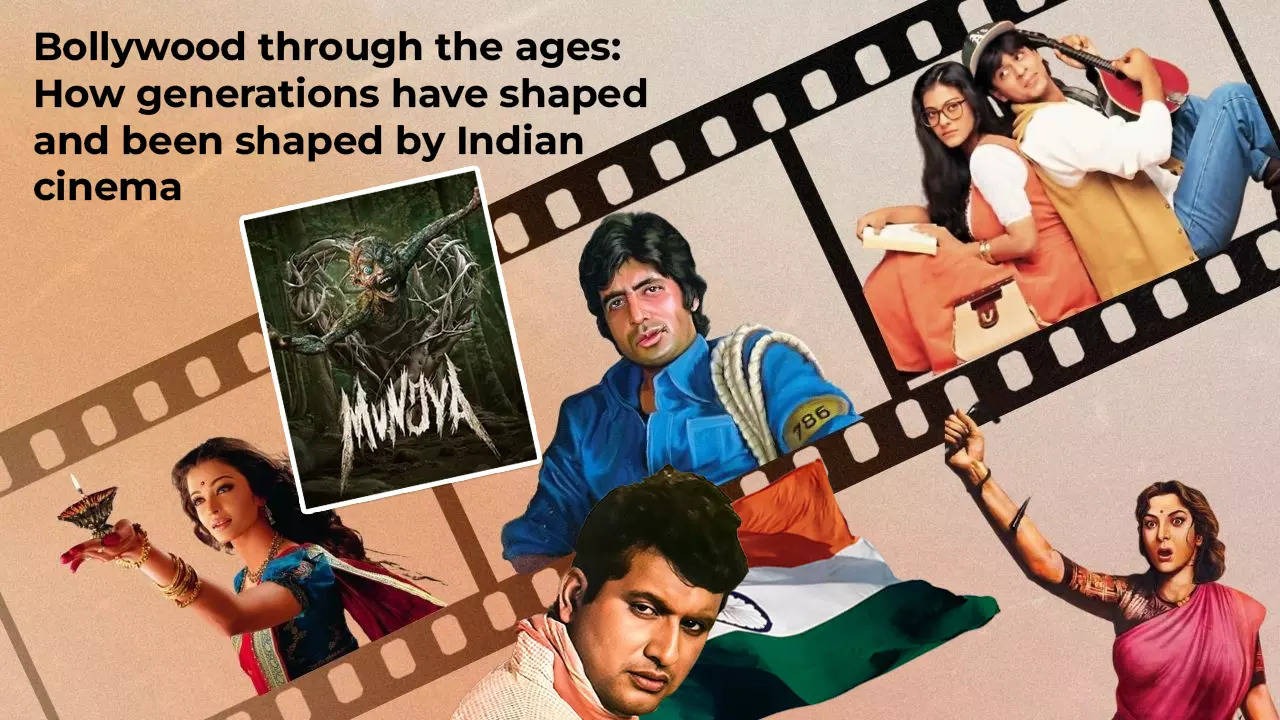
Bollywood’s larger-than-life stories have captured global attention (Photo: Shutterstock)
Additionally, independent films or “indie” cinema have carved their niche in the industry. Directors like Anurag Kashyap, Zoya Akhtar, and Vishal Bhardwaj have been instrumental in giving voice to alternative and bold stories.
These films investigate diverse subjects, ranging from political corruption to personal identity, offering fresh perspectives that contrast with mainstream Bollywood fare.
Indian Cinema Today: A Global Presence
The current state of Indian cinema is marked by its increasing presence on the global stage. Bollywood, along with regional and indie films, continues to make an impact worldwide. International film festivals, streaming platforms, and collaborations with Hollywood have expanded Indian cinema’s reach.
The rise of actors like Priyanka Chopra and Irrfan Khan, who have made a name for themselves internationally, has further contributed to the industry’s global standing.
Filmmakers in India now have access to a broader audience, and they are using this opportunity to experiment with different genres, storytelling techniques, and visual aesthetics. The fusion of Indian storytelling traditions with modern cinematic techniques is creating a new form of global cinema.
Indian cinema has evolved from its humble beginnings to a powerhouse of creativity and expression. As the industry continues to grow and innovate, it remains a crucial part of India’s cultural fabric and a major player in the global film industry. The journey of Indian cinema has been one of constant reinvention, blending tradition with modernity and maintaining its relevance on the world stage.