
Positioning itself as a leader in the digital economy took years of structured policy work, private sector engagement, and targeted investment. What started as a destination for outsourced IT services gradually grew into something larger, as talent, infrastructure, and innovation all began to rise together.
A country once known for offering cost-effective back-office support now finds its name among those steering global technological advancements. The transformation did not come overnight, and it was not based on luck. Deliberate moves were made at every level, from education reforms to partnerships with major tech companies.

Engineers brainstorm solutions at a bustling tech hub in Hyderabad (Photo: Getty Images)
The turning point began when information technology started receiving focused government attention in the late 20th century. Young professionals began flooding into engineering and computer science fields, filling the demand for technical skills both locally and internationally.
Domestic firms such as Infosys, Wipro, and TCS started carving their place in global markets. Foreign corporations took notice and started setting up offices to tap into the local workforce. Over time, this cooperation between Indian companies and global enterprises created a mature tech environment with far-reaching influence.
Strong Educational Base Supported the Rise
The expansion of technical education played a crucial part in this story. Institutions like the Indian Institutes of Technology (IITs) began producing graduates who were not only skilled but also adaptable to fast-changing industry needs.
Beyond IITs, private colleges also increased their capacity and began training large numbers of engineers. These graduates did not only work in India; many became leaders in global companies, which added to the country’s reputation.
What followed was an increase in research and development investments. Several tech firms chose to set up innovation centres in major cities like Bengaluru, Hyderabad, and Pune.
The local workforce could now contribute to software design, artificial intelligence, cybersecurity, and cloud computing all from their home soil. This proved that the country was no longer just a destination for outsourcing low-end work but had evolved into a centre for invention and progress.
Policy Support Created Stable Conditions
The government played a proactive role by developing frameworks that encouraged tech growth. Initiatives such as Digital India and Startup India provided opportunities for entrepreneurs and startups to thrive.
Investments in digital infrastructure, like broadband connectivity and public data platforms, allowed more people to join the digital economy. Regulation was also addressed in a way that encouraged competition while ensuring security.
Alongside these programmes, the creation of Special Economic Zones (SEZs) made it easier for companies to do business with fewer bureaucratic obstacles. This combination of innovation and regulation gave multinational firms the confidence to invest further.
The country began to move up the value chain, offering high-end tech solutions, software development, fintech platforms, and data analytics capabilities.
Youth Population Provided an Edge
A major factor in the country’s tech advancement is its youthful population. With a large share of people under the age of 35, there is an ongoing supply of tech-savvy individuals ready to learn and adapt. This demographic strength is reinforced by widespread internet access and mobile connectivity, creating a highly engaged digital population.
Social media use, digital payments, and mobile applications are widespread among young people, and this user base has helped startups test new products quickly. Entrepreneurs no longer needed to wait for foreign demand.
Local markets, especially in urban and semi-urban areas, became proving grounds for apps, platforms, and services. Some of these innovations later found global appeal, especially in fields like edtech, healthtech, and agritech.
Startups Brought Fresh Ideas and Global Attention
The startup environment has grown in remarkable ways, with more than 100 tech unicorns emerging in recent years. These are firms valued at over a billion dollars, and many of them focus on digital services, e-commerce, or financial technology. The success of such firms has led to increased interest from global investors.
Bengaluru is often compared to Silicon Valley due to the volume and quality of startups present. At the same time, cities like Mumbai, Delhi, and Chennai are also making contributions in fintech, logistics, and clean tech. The broader reach of startup culture now extends to smaller towns as well, supported by incubation centres and co-working spaces.
International venture capital firms, private equity groups, and tech giants such as Google and Microsoft have been part of this momentum. Many of them have launched accelerators or mentorship programmes to support local entrepreneurs, further strengthening the ecosystem.
Advances in Artificial Intelligence and Data Sciences
Another main feature of the current phase is the embrace of artificial intelligence, machine learning, and data-driven solutions. Indian researchers and engineers now play a part in global AI development, and the country has witnessed a rise in AI applications across various sectors. Healthcare firms use machine learning to improve diagnostics, while financial institutions use algorithms to detect fraud and manage risk.
Several institutions and private companies have established AI labs and data research centres. Public-sector efforts, including those that use data to enhance public health and agriculture planning, have also added depth to the adoption of such tools. These changes help cement the country’s image as a centre where innovation meets application.
Tech Giants Increased Their Involvement
The world’s leading technology firms now maintain deep connections with the country. Amazon, Google, Facebook, Apple, and Microsoft have not only invested heavily but also shifted some of their global operations to Indian cities. These investments are not limited to customer service; they involve cloud services, AI research, chip design, and product development.
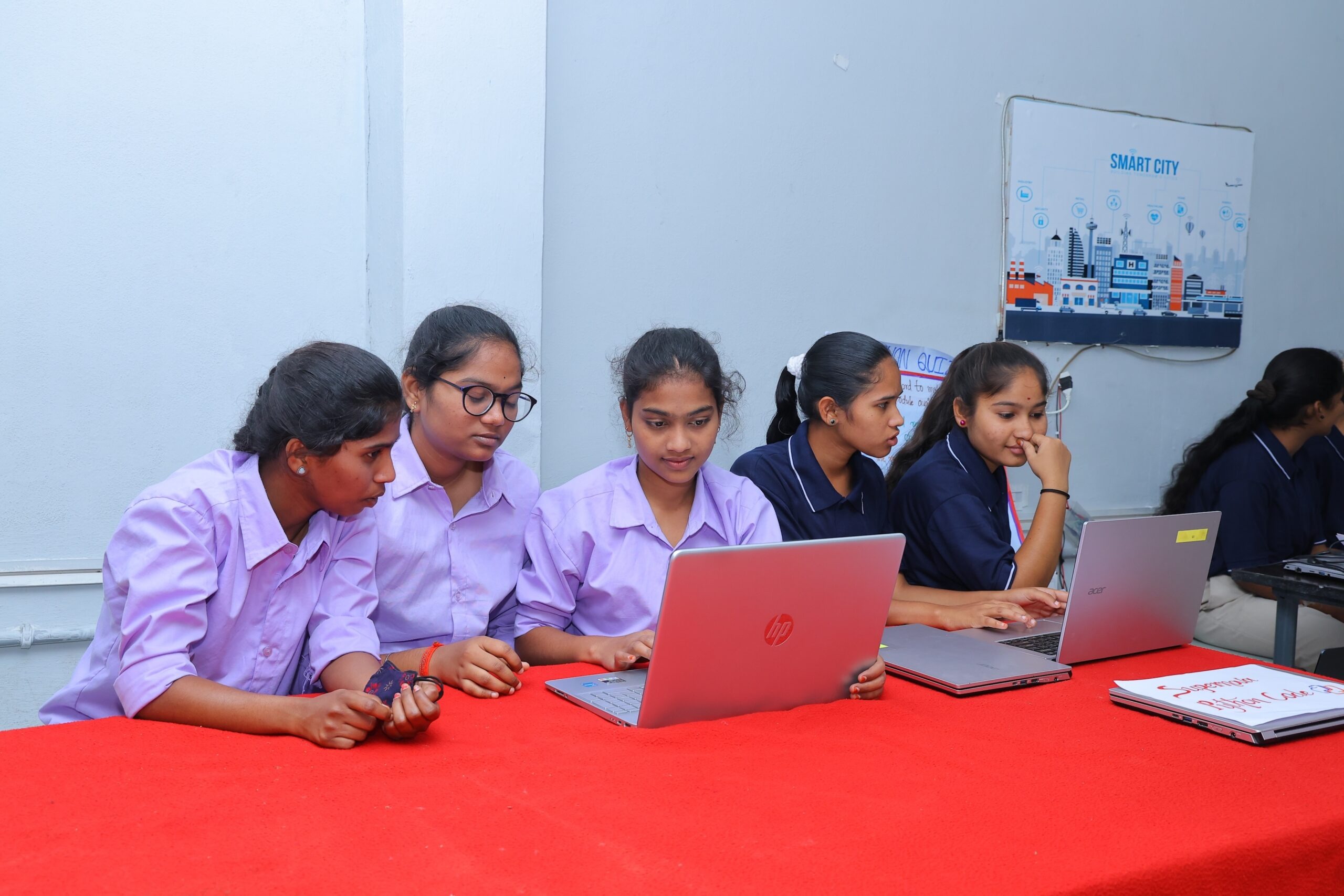
Students attend a coding bootcamp at a private tech institute (Photo: Shutterstock)
In some cases, India serves as the primary site for testing new features or launching pilot programmes. For instance, payment platforms and social media tools often roll out first in Indian markets before reaching other parts of the globe. This level of trust reflects the capabilities of the workforce and the readiness of the consumer base.
The country also hosts many data centres, supported by favourable regulations and the availability of skilled engineers. These developments have attracted further business from international clients who seek reliable tech infrastructure.
Challenges Remain but Do Not Hinder Progress
While the achievements are plenty, several issues still require attention. Internet access remains inconsistent in some rural regions, and digital literacy levels vary widely. Power supply, logistics, and cybersecurity infrastructure also face pressure due to rapid expansion.
However, efforts are ongoing to close these gaps. Programmes aimed at increasing rural connectivity and digital awareness continue to expand. Partnerships between the private sector and educational institutions are producing more technically competent graduates. With each improvement, more people can benefit from technology-led opportunities.
Global Role Grows with Each Passing Year
The country now takes part in international discussions on data governance, digital taxation, and intellectual property rights. As more Indian professionals join multinational firms, they also shape policies and technological direction at the global level.
The country’s digital public infrastructure models, such as the Aadhaar identity system and UPI payments platform, are being studied by other governments and institutions.
Several countries now seek partnership opportunities with Indian firms and researchers. These partnerships extend to areas like semiconductor design, cloud computing, and green technologies. Through these links, knowledge flows both ways, contributing to worldwide advancement.
Years of consistent investment in people, education, and digital infrastructure have made a difference. The combination of youth, ambition, and access to tools has created a fast-moving, tech-focused culture.
The presence of international companies and the rise of home-grown startups show that this is no longer a place only known for outsourced support. It is now a place where innovation is created, scaled, and exported.
Through consistent efforts and strategic choices, the country has found a seat at the global technology table. More progress is expected as digital adoption deepens and policies continue to support innovation. As challenges are addressed and opportunities grow, the momentum appears set to continue well into the future.