

































NASA Administrator Jared Isaacman on Friday unveiled a sweeping restructuring of the agency’s Artemis moon program, acknowledging that the current plan to return astronauts to the lunar surface in 2028 was not achievable without an additional preparatory mission.
The overhaul comes amid mounting safety concerns and delays that have complicated the timeline for future lunar landings.
Under the revised plan, NASA will add a new mission in 2027 in which astronauts will dock in low-Earth orbit with commercially developed lunar landers.
The goal of that flight will be to conduct detailed testing of navigation systems, communications, propulsion, and life support capabilities, as well as to validate rendezvous procedures.
That mission will serve as a precursor to at least one, and potentially two, lunar landings in 2028, incorporating lessons learned from the earlier flight.
The strategy marks a shift toward incremental development rather than attempting multiple high-risk milestones in a single mission.
“We’re going to get there in steps, continue to take down risk as we learn more and we roll that information into subsequent designs,” Isaacman told. “We’ve got to get back to basics.”
Isaacman outlined the plan in an interview with space contributor Christian Davenport and later reiterated it during a news conference.
His announcement followed the release of a sharply critical report from NASA’s independent Aerospace Safety Advisory Panel, which characterized the original Artemis III landing plan as overly risky due to the number of untested systems involved. The panel recommended that NASA “restructure” the program to create a more balanced risk posture.
“It is interesting that a lot of the things that we are addressing directly go to the points they raised in their report,” Isaacman said. “I can’t say we actually collaborated on it because I generally think these were all pretty obvious observations.”
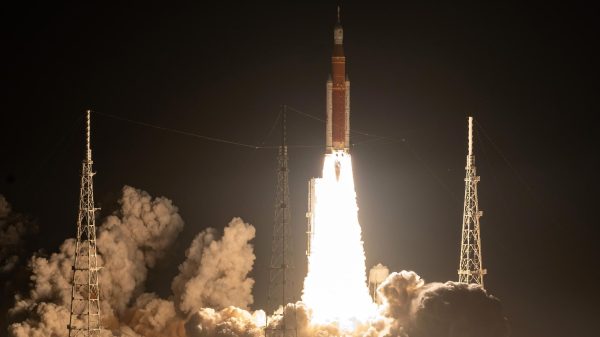
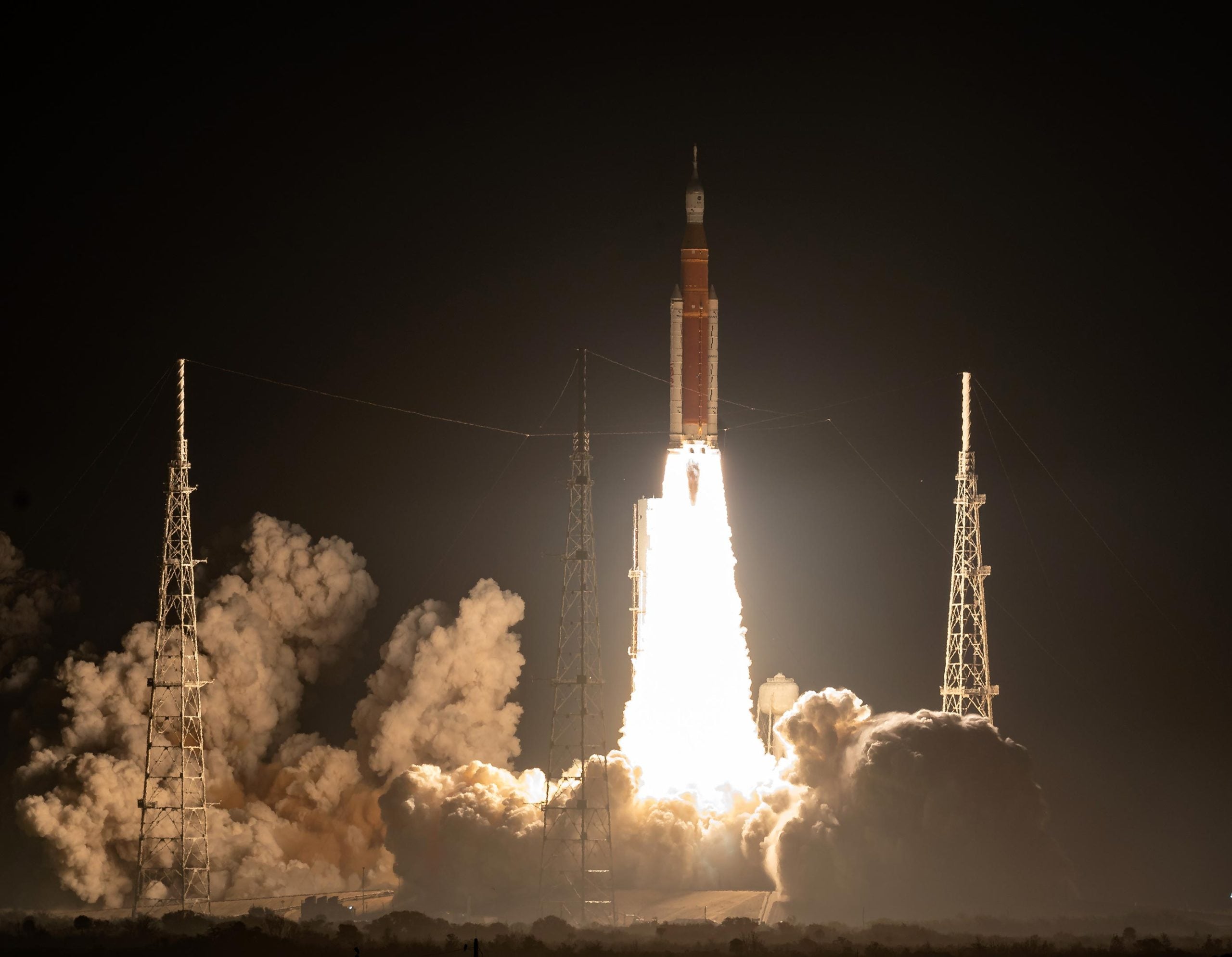
The restructuring also comes as NASA continues to grapple with delays to Artemis II, the mission intended to send four astronauts on a lunar flyby.
Originally scheduled for early February, the launch was postponed due to a hydrogen leak and later to address a helium pressurization issue in the rocket’s upper stage. The mission is now delayed until at least April 1.
Under the revised framework, Artemis III, once intended to land astronauts near the moon’s south pole in 2028, will instead launch in 2027 for Earth-orbit testing.
Astronauts will rendezvous and dock with one or both commercial landers currently being developed by SpaceX and Blue Origin. The objective is to gain operational experience before committing to a lunar landing with crew aboard.
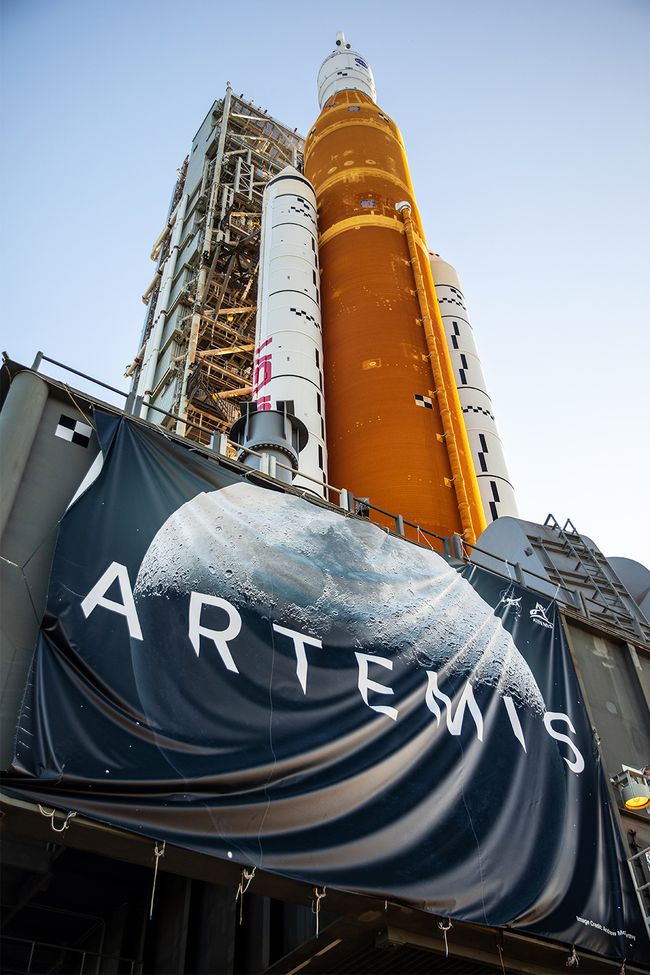
Artemis Moon Program
The mission will also allow astronauts to test next-generation lunar spacesuits in microgravity. “It’s an opportunity to … actually have the suits in microgravity, even if we don’t go outside the vehicle in them. You get a lot of good learning from that,” Isaacman noted.
The concept mirrors Apollo 9 in 1969, when NASA conducted Earth-orbit tests of lunar hardware before attempting the Apollo 11 landing months later.
Isaacman emphasized that both SpaceX and Blue Origin plan uncrewed lunar landing demonstrations under existing agreements and that NASA aims to position both companies for success.
“So we want to just take advantage of this to set up both vendors for future success on a lunar landing,” he said.
“This is the proper way to do it, if it works out from a timing perspective, to be able to rendezvous and dock with both. … This, again, is the right way to proceed in order to have a high confidence opportunity in ’28 to land.”
Artemis IV and V are now targeted for 2028, using whichever landers are deemed flight-ready. If only one company’s system is available, it may be used for both missions. If both are certified, NASA could divide the flights between them.
Isaacman acknowledged that accelerating the launch cadence from roughly one mission every 18 months to one per year will require rebuilding NASA’s workforce and restoring technical expertise.
He argued that increased frequency would ultimately reduce risk. “When you regain these core competencies and you start exercising your muscles, your skills do not atrophy,” he said. “It’s safer.
And yes, you are buying down risk, because you’re able to test things in low Earth orbit before you need to get to the moon, which is exactly what we did during the Apollo era.”
He stressed that the slower pace of Artemis missions was not solely the fault of contractors, suggesting instead that earlier program decisions had been overly ambitious. “We should have made better decisions (in the past) and said, you don’t go from Artemis II to landing on the moon with Artemis III.”
The safety panel’s report had specifically warned that moving directly from Artemis II to a crewed lunar landing using a SpaceX lander lacked a sufficient safety margin. The revised plan appears to directly address those concerns.
NASA officials confirmed that Isaacman discussed the new strategy with key contractors, including Boeing, United Launch Alliance, Lockheed Martin, SpaceX, and Blue Origin, and said all were supportive.
Boeing stated it was “ready to meet the increased demand,” while SpaceX said it looks forward to flying missions that advance a “permanent, sustainable presence on the lunar surface.” Blue Origin responded enthusiastically: “Let’s go! We’re all in!”
As part of the restructuring, NASA will halt development of the more powerful Exploration Upper Stage (EUS) variant of the Space Launch System rocket.
Instead, it will proceed with a standardized, less powerful upper stage designed to minimize configuration changes between missions and continue using the existing launch infrastructure.