

















Israel initiated a renewed series of airstrikes on Tehran on Sunday, stating that its objective was to assert aerial dominance after assassinating Iran’s supreme leader, an action that has left the Islamic Republic struggling to reconstruct its leadership structure during what appears to be its most severe crisis in nearly half a century.
The exchange of strikes between the United States, Israel, and Iran triggered immediate turbulence across multiple sectors, including maritime shipping, commercial aviation, and global energy markets.
Analysts warned of escalating oil prices and potential disruptions to trade routes through the Gulf, a strategically vital corridor that underpins a substantial portion of global commerce.
Iranian President Masoud Pezeshkian announced that a provisional leadership council had assumed the responsibilities of the Supreme Leader following the death of Ayatollah Ali Khamenei.
The council consists of Pezeshkian himself, the head of the judiciary, and a representative from the influential Guardians Council, reflecting an interim arrangement aimed at maintaining state continuity during the transition.
The US military confirmed that it had sunk an Iranian vessel, while Iran’s Revolutionary Guards declared that they had targeted the US aircraft carrier Abraham Lincoln with four ballistic missiles, according to state media reports.
The conflict’s widening scope became evident as civilian casualties mounted. Israel’s ambulance service reported nine fatalities resulting from a missile strike in the town of Beit Shemesh.
The United Arab Emirates stated that Iranian attacks killed three individuals within its territory, and Kuwaiti authorities confirmed one death linked to Iranian raids.
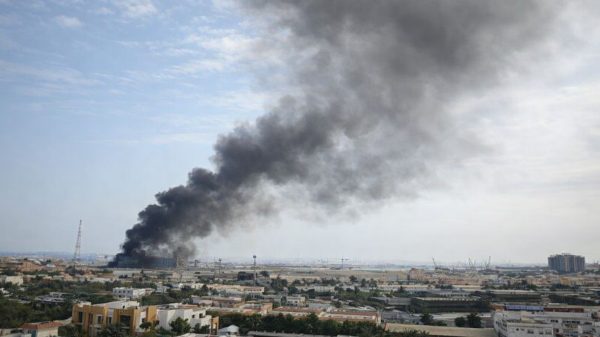
Satellite imagery captured extensive destruction at the compound of Iranian Supreme Leader Ayatollah Ali Khamenei in Tehran.
The images showed thick black smoke rising from the site and significant structural damage following coordinated strikes by the United States and Israel on February 28, 2026. The photographs, attributed to Reuters, underscored the scale and precision of the operation.
The Israeli military disclosed that, over the preceding 24 hours, its aircraft had carried out operations intended to open the “path to Tehran,” asserting that the majority of Iran’s aerial defense systems in western and central regions had been dismantled.
It added: “Ali Khamenei was targeted in a precise, large-scale operation carried out by the Israeli Air Force, guided by accurate IDF intelligence, while he was in his central leadership compound in the heart of Tehran, where he was together with additional senior officials”.
Israeli military spokesperson Lieutenant Colonel Nadav Shoshani stated that numerous objectives remain active targets, including military-industrial production facilities. “We have the capabilities and the targets to keep going on for as long as necessary,” he said.
When asked whether Israel was considering deploying ground forces, Shoshani clarified that such an option was not under consideration.
This position came despite public statements from US President Donald Trump and Israeli Prime Minister Benjamin Netanyahu encouraging Iranians to capitalize on what they described as a rare opportunity to challenge their leadership.
Hours after US and Israeli officials announced that an airstrike had killed Khamenei, Iranian state media confirmed the death of the 86-year-old leader.
Reactions within Iran reflected deep societal divisions. Some citizens mourned Khamenei’s death, while others openly celebrated, revealing significant internal fault lines in a country stunned by the abrupt loss of a leader who had governed for decades.
Earlier in the year, thousands of Iranians were killed during a government crackdown authorized by Khamenei in response to anti-government protests in January. The unrest marked the deadliest wave of internal dissent since the Islamic Revolution of 1979.
Footage from Tehran depicted large gatherings of mourners dressed in black, assembled in public squares, many visibly grieving. Conversely, social media videos showed scenes of jubilation in other regions.
In Dehloran, located in Ilam province, a statue was toppled amid celebrations. Residents in Karaj, near Tehran in Alborz province, were seen dancing in the streets, while similar festivities occurred in Izeh in Khuzestan province. Reuters verified the geographic authenticity of these recordings.
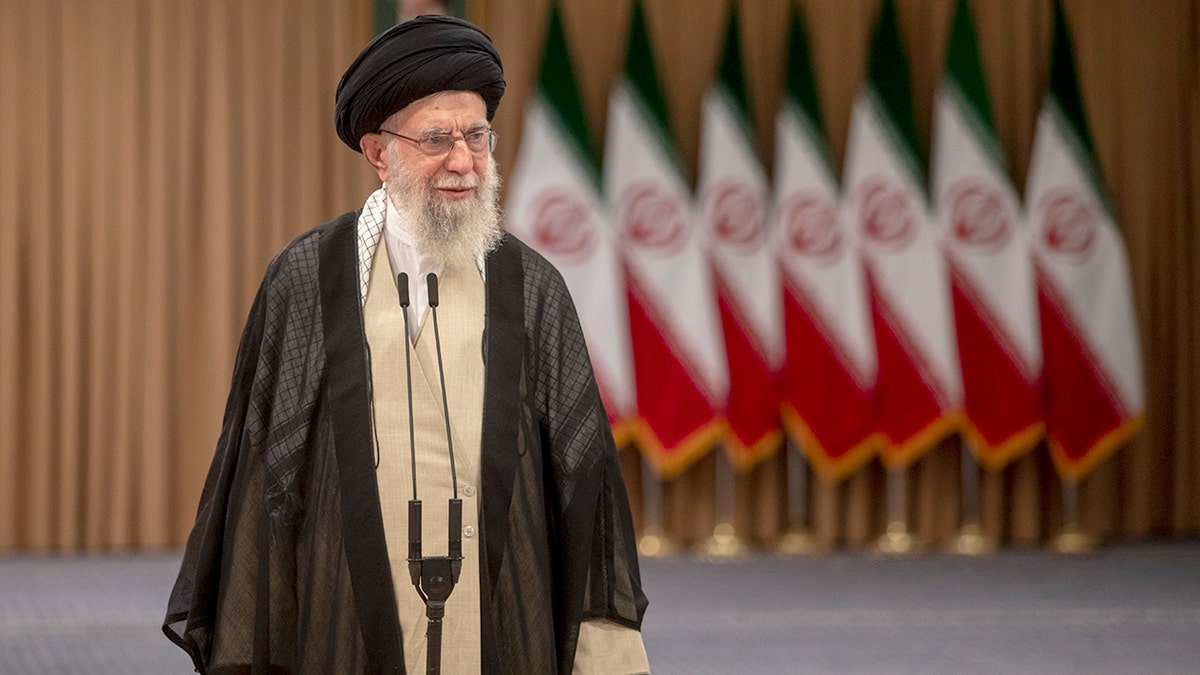
Death of Ayatollah Ali Khamenei
State media reported that Khamenei was working in his office at the time of Saturday’s strike. The attack also resulted in the deaths of his daughter, grandchild, daughter-in-law, and son-in-law.
Two US sources and a US official familiar with the matter indicated that Israel and the United States coordinated the timing of the operation to coincide with a meeting Khamenei was conducting with senior advisers.
Regional and geopolitical analysts observed that although the elimination of Khamenei and other high-ranking Iranian figures represents a significant institutional shock, it does not necessarily signal the collapse of Iran’s entrenched clerical establishment or the enduring influence of the Revolutionary Guards.
As supreme leader, Khamenei exercised ultimate authority in Iran. He served as commander-in-chief of the armed forces and directed foreign policy, which was largely characterized by strategic confrontation with the United States and Israel.
International reaction was swift. Russian President Vladimir Putin condemned Khamenei’s death as a cynical murder, while Chinese Foreign Minister Wang Yi described it as “blatant killing”. European Union foreign policy chief Kaja Kallas characterized the event as “a defining moment in Iran’s history”.
Following Iran’s retaliatory airstrikes across the Gulf region, Anwar Gargash, adviser to the president of the United Arab Emirates, urged Tehran to “go back to your senses”, emphasizing that the conflict was not with its Gulf Arab neighbors. The UAE has thus far absorbed the most significant impact from Iran’s counterattacks.
President Trump warned on Sunday that the United States would respond with overwhelming force if Iran launched further retaliation.
Indicators of strain within global energy supply chains emerged rapidly. Shipping data showed that at least 150 tankers, including vessels carrying crude oil and liquefied natural gas, had anchored in open Gulf waters beyond the Strait of Hormuz. Dozens more remained stationary on the opposite side of the strategic chokepoint following US and Israeli strikes.
According to Reuters estimates based on MarineTraffic ship-tracking data, oil tankers were concentrated in open waters off the coasts of major Gulf producers such as Iraq and Saudi Arabia, as well as LNG powerhouse Qatar.
In direct remarks aimed at Trump and Israeli Prime Minister Benjamin Netanyahu, Iran’s parliament speaker Mohammad Baqer Qalibaf stated “we will strike you with such terrifying blows that you yourselves will be driven to beg”.
“I say to Trump and Netanyahu and their agents and proxies, I repeat, I say to these two filthy criminals and to all their agents: you have crossed our red line, and you must pay the price for it.”
Khamenei maintained a substantial following among Shi’ite communities beyond Iran’s borders, particularly in countries including Iraq and Pakistan, which host the largest Shi’ite populations after Iran itself.
Analysts reiterated that while the deaths of Khamenei and other senior leaders constitute a profound setback, they do not automatically dismantle Iran’s established clerical governance structure or diminish the operational authority of the Revolutionary Guards.
The United States will hit Iran “with a force that has never been seen before,” US President Donald Trump said, should the Middle East nation retaliate for US strikes.
“Iran just stated that they are going to hit very hard today, harder than they have ever been hit before,” Trump said in a post on Truth Social.
He added, “THEY BETTER NOT DO THAT, HOWEVER, BECAUSE IF THEY DO, WE WILL HIT THEM WITH A FORCE THAT HAS NEVER BEEN SEEN BEFORE!”
Over the past two years, Israeli military operations had already eliminated several senior Iranian military commanders and significantly weakened multiple proxy forces aligned with Tehran across the Middle East.
Following a 12-day air war in June, during which Israel struck Iran and the United States joined the campaign, both Washington and Jerusalem warned that further action would follow if Iran continued advancing its nuclear and ballistic missile programs.
At a United Nations Security Council session on Saturday, representatives from Russia and China criticized the timing of the strikes, arguing that they occurred while Tehran was engaged in negotiations with Washington.
Russia’s UN envoy Vasily Nebenzya asserted that Iran had been “stabbed in the back” and challenged the US justification that preventing Iran from obtaining nuclear weapons warranted the attacks.
Senior US officials stated on Saturday that recent negotiations demonstrated Iran’s unwillingness to relinquish its uranium enrichment capabilities.
Iranian officials maintained that enrichment activities were intended for civilian nuclear energy, whereas US authorities argued that such capabilities would enable the development of a nuclear weapon.