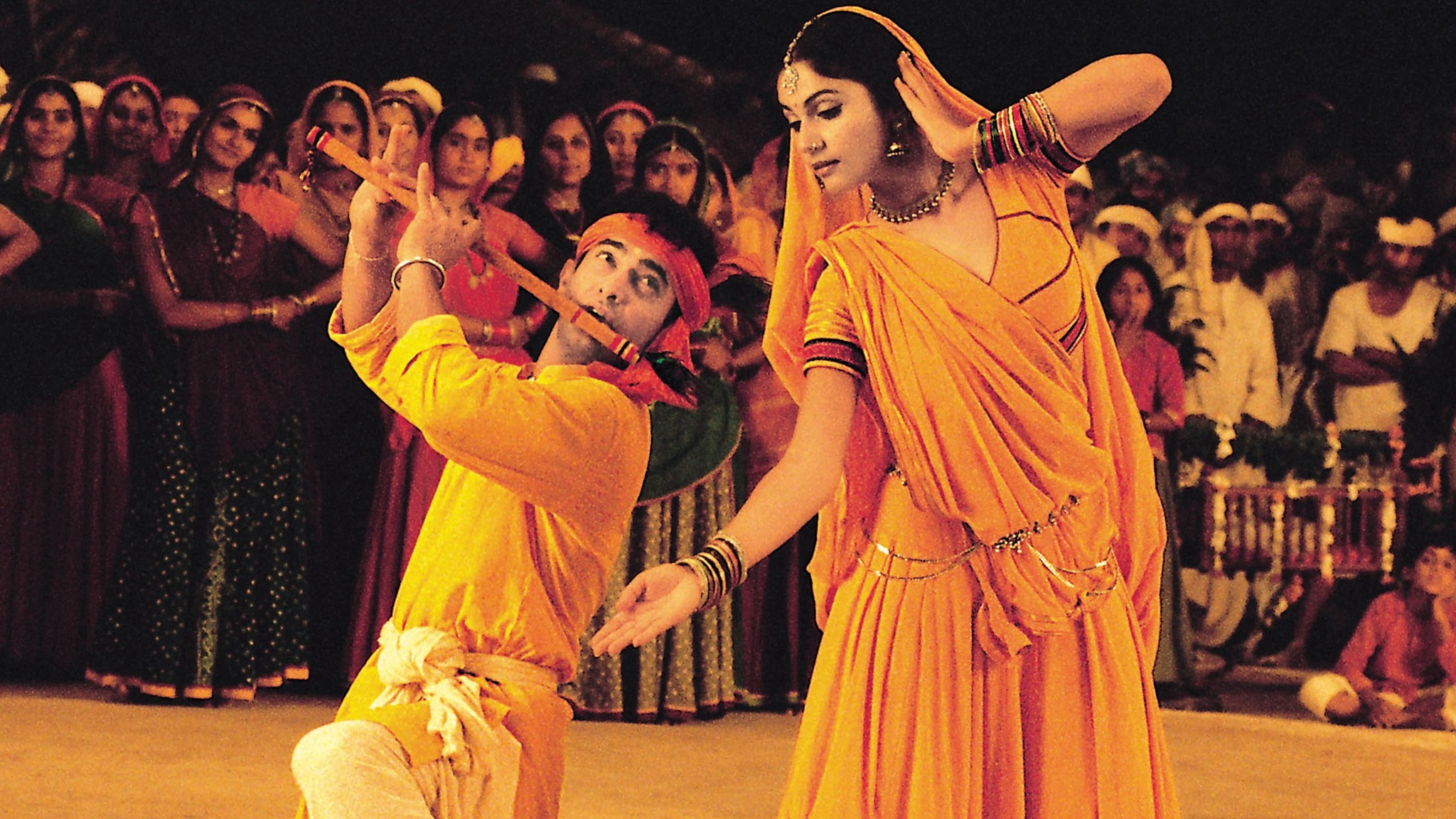
Music has long held a powerful place in cinema from the South Asian region, with its roots stretching as far back as the early 20th century. Before films had sound, musical elements already played a central role in storytelling, where live musicians would accompany silent films to enhance emotions.
Once sound was introduced into cinema, music became more than just background entertainment. It transformed into a strong storytelling tool, shaping characters, expressing love and loss, and driving plots forward with deep emotion.
The first Indian film with sound, Alam Ara (1931), changed the course of cinema by featuring several songs that were deeply tied to the characters’ emotional journey. That breakthrough opened the door for a strong relationship between music and movies.
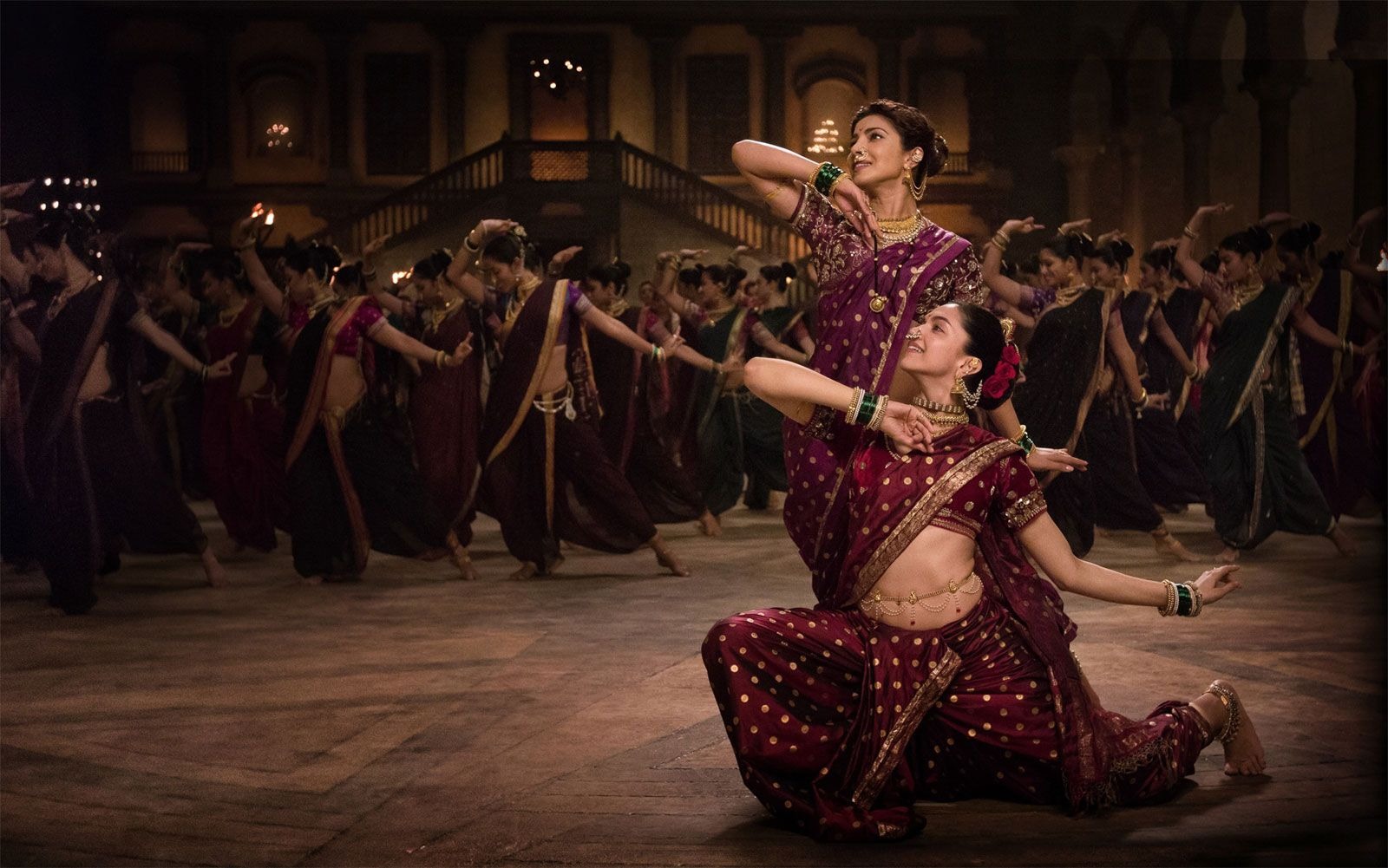
From sitars to screenplays, melodies shaped Indian cinema’s soul (Photo: Getty Images)
Over the years, the industry produced songs that were not only part of film scripts but also became part of everyday life across the country and beyond. With each decade, the style, form, and usage of music in Indian movies kept changing, reflecting changes in society, culture, technology, and the influence of global music styles.
Early Beginnings and Influence from Traditional Music
The earliest Indian films with songs drew heavily from classical music traditions. Directors and composers leaned on Carnatic and Hindustani classical forms, which gave film songs a unique sound rich in cultural depth.
These early soundtracks featured instruments like the sitar, tabla, harmonium, and sarangi, played in a way that mirrored established musical frameworks used in temples, court performances, and rural folk songs.
Back then, playback singing had not yet become common. Actors would sing their parts live during filming, which required them to be trained singers. This shaped the kind of actors that were cast in leading roles.
Many came from theatre backgrounds or had classical music training. Songs were often used to support moral lessons, present social concerns, or offer spiritual reflection, rather than serve as simple interludes.
Growth of Playback Singing and the Golden Age
By the 1940s and 1950s, playback singing took firm root, allowing professional singers to record songs that actors would lip-sync on screen. This allowed actors who had no music background to take lead roles, while singers like Lata Mangeshkar, Mohammed Rafi, Mukesh, and Kishore Kumar began to rise to fame. These voices defined the musical identity of the Indian film industry during what many see as its golden age.
Music directors during this period, including S.D. Burman, Naushad, Shankar-Jaikishan, and Madan Mohan, created compositions that balanced Indian classical tones with Western orchestration.
They brought in string sections, jazz elements, and even operatic influences. Films from this era featured songs that were deeply tied to the emotions of characters and were remembered long after the films left theatres.
Impact of Social Change in the 1960s and 1970s
The 1960s and 1970s came with sweeping changes in music, driven by urbanisation, political movements, and exposure to international pop culture. Bollywood began to embrace new genres such as rock and roll, disco, and funk. This led to faster rhythms, energetic choreography, and changing visuals that favoured modern city settings over rural backdrops.
R.D. Burman stood out during this period as someone who redefined film music by blending Indian melodies with global styles. He introduced electronic instruments and borrowed freely from Latin, Arabic, and Western music.
At the same time, the voice of Kishore Kumar became synonymous with romantic leads, while Asha Bhosle continued to show range across various musical forms.
During this phase, music also took a sharper commercial turn. Songs were crafted with the goal of topping radio charts and drawing people to cinemas. Soundtracks began to release before the film itself, sometimes building up so much anticipation that people would buy tickets just to see how the songs looked on screen.
Rise of Regional Music in Mainstream Cinema
While Hindi-language films dominated the centre stage, regional cinemas in languages like Tamil, Telugu, Malayalam, and Kannada developed their own musical traditions.
These regional industries created rich soundscapes that combined local folklore, devotional music, and classical training. Composers such as Ilaiyaraaja and later A.R. Rahman rose through these systems and brought fresh innovation.
Ilaiyaraaja introduced synthesizers and complex arrangements that matched the visual style of South Indian films. His work was rooted in both Indian ragas and Western classical theory.
By the 1990s, A.R. Rahman changed the game with his groundbreaking approach to music production. He mixed traditional sounds with cutting-edge technology and digital engineering, giving film music a broader reach.
Rahman’s work on films like Roja and Bombay marked a turning point in how film music was produced and consumed. He collaborated with global musicians and experimented with formats that suited both cinema and the growing audio cassette market, which helped spread music more widely than ever before.

Songs once sung live on set now echo across generations (Photo: Alamy)
Entry into the Digital Age
The 2000s introduced changes in how music was created, distributed, and enjoyed. With the rise of internet access, MP3s, and streaming platforms, the film music industry had to adjust quickly.
Songs no longer relied only on radio or physical sales to gain popularity. A song’s performance on platforms like YouTube, Spotify, and Apple Music became just as important as its appearance in a film.
This period also saw shorter attention spans and a preference for catchy, fast-paced music that could go viral. While love songs and ballads remained popular, item numbers and dance tracks with heavy beats became more frequent.
Composers like Pritam, Vishal-Shekhar, and Amit Trivedi brought fresh energy by experimenting with fusion styles and collaborating with independent artists.
The link between music and movie marketing also became stronger. A hit soundtrack could carry an average film to box office success. Trailers began to include song clips, and music videos were sometimes produced before the film was complete. The relationship between visuals and audio grew more intricate.
Contemporary Trends and Global Influence
Modern Indian films continue to rely on music, but the approach has become more refined and diversified. With streaming services dominating, music is now judged on both its artistic merit and digital reach.
Musicians today balance traditional forms with rap, hip hop, EDM, and international collaborations. Lyrics have also changed. While poetic Urdu lines still exist, simple and relatable writing has become more common, especially to appeal to younger viewers.
Cross-border success has become more visible. Songs from Indian films are now featured in international charts, social media trends, and non-Indian playlists.
Dance challenges, remixes, and reels help boost popularity. Indian music directors now work with global artists, creating tracks that attract listeners who may have never watched a full Indian movie.
Today, while some songs are still deeply connected to the plot, others are made for mass appeal. Standalone singles that exist beyond the movie they belong to are common. This has changed the structure of film albums, where some movies have just two or three songs rather than the five or six that used to be standard.
As new formats keep shaping the way people consume entertainment, the bond between music and Indian movies remains steady. Music continues to shape identity, express emotion, and bring people together across languages and regions. Filmmakers now think about music not only during production but from the early stages of planning, with separate music launch events and partnerships with streaming companies.
Technological tools like artificial intelligence and advanced sound design are making their way into film scoring. This could lead to more detailed compositions that match character arcs and emotional tones.
At the same time, there is also a return to roots. Many filmmakers are turning to folk music, ancient instruments, and raw acoustic styles to provide a more grounded and unique sound.
While the format of Indian film music has changed, its place at the centre of the cinematic experience has remained strong. It continues to adapt to new tastes, new tools, and new stories. Whether played in a theatre, on a phone, or at a festival, film music still holds its ability to stir emotions and make movie moments unforgettable.