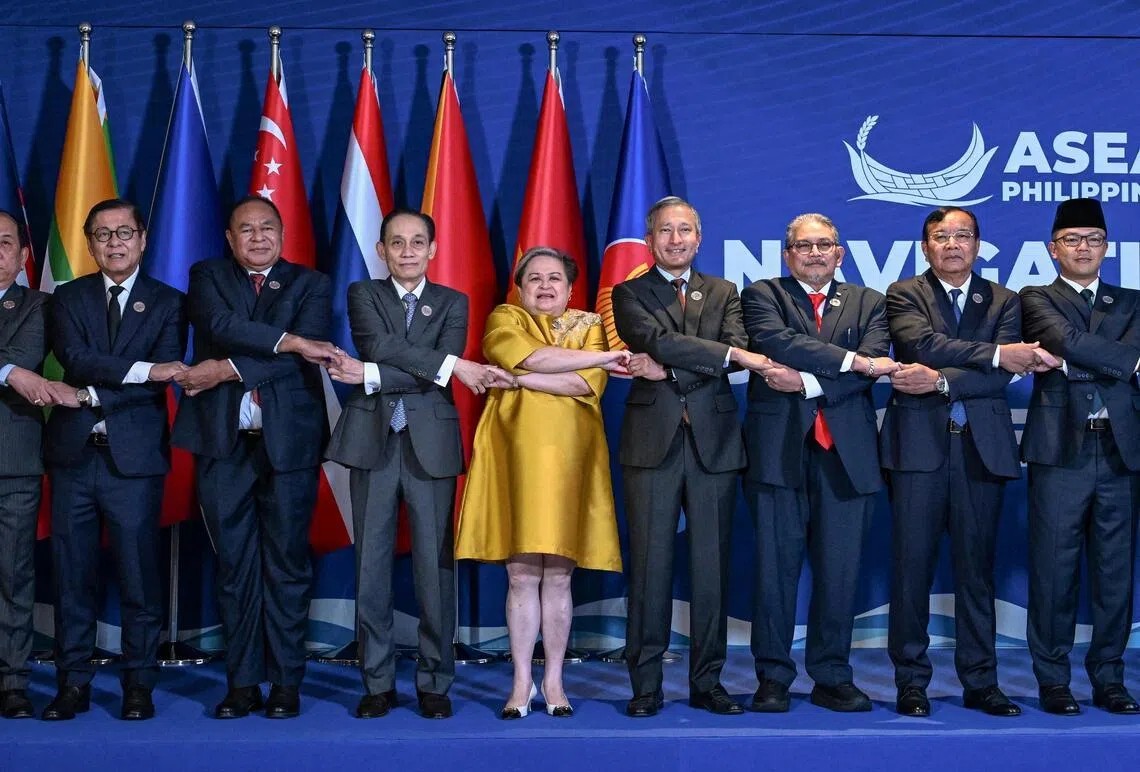
Myanmar’s Southeast Asian neighbors should pursue a policy of “calibrated engagement” with the country’s military-controlled, post-election administration while continuing to press for an end to the fighting, Thailand said on Thursday, indicating a potential easing of its position.
Speaking at a meeting of foreign ministers from the 11-member Association of Southeast Asian Nations, the Philippines, which is hosting and chairing the gathering, also said the bloc saw some possible positive elements in the vote, even though it has not formally endorsed it.
Myanmar’s military-backed Union Solidarity and Development Party is expected to lead the next government after winning elections held over three rounds on December 28, January 11, and January 25. The polls were not contested by opposition groups, as the country remains locked in a civil war sparked by a 2021 military coup.
While rights organizations, the United Nations, and the United Kingdom have condemned the vote as a sham designed to entrench the military’s hold on power, junta leader Min Aung Hlaing said the people’s participation in the ballot conferred legitimacy, regardless of international reactions.
Thai Foreign Minister Sihasak Phuangketkeow told Reuters that although ASEAN has barred Myanmar’s military leaders from attending high-level meetings since 2022, the election could open the door to engagement if certain conditions are met, such as broader access for humanitarian aid and a reduction in violence.
“We think that we have to engage with the regime in Naypyitaw, the new one. They’re going to form a government probably in March,” Sihasak said in an interview on the sidelines of the meeting, adding that he hoped Myanmar would respond with constructive steps.
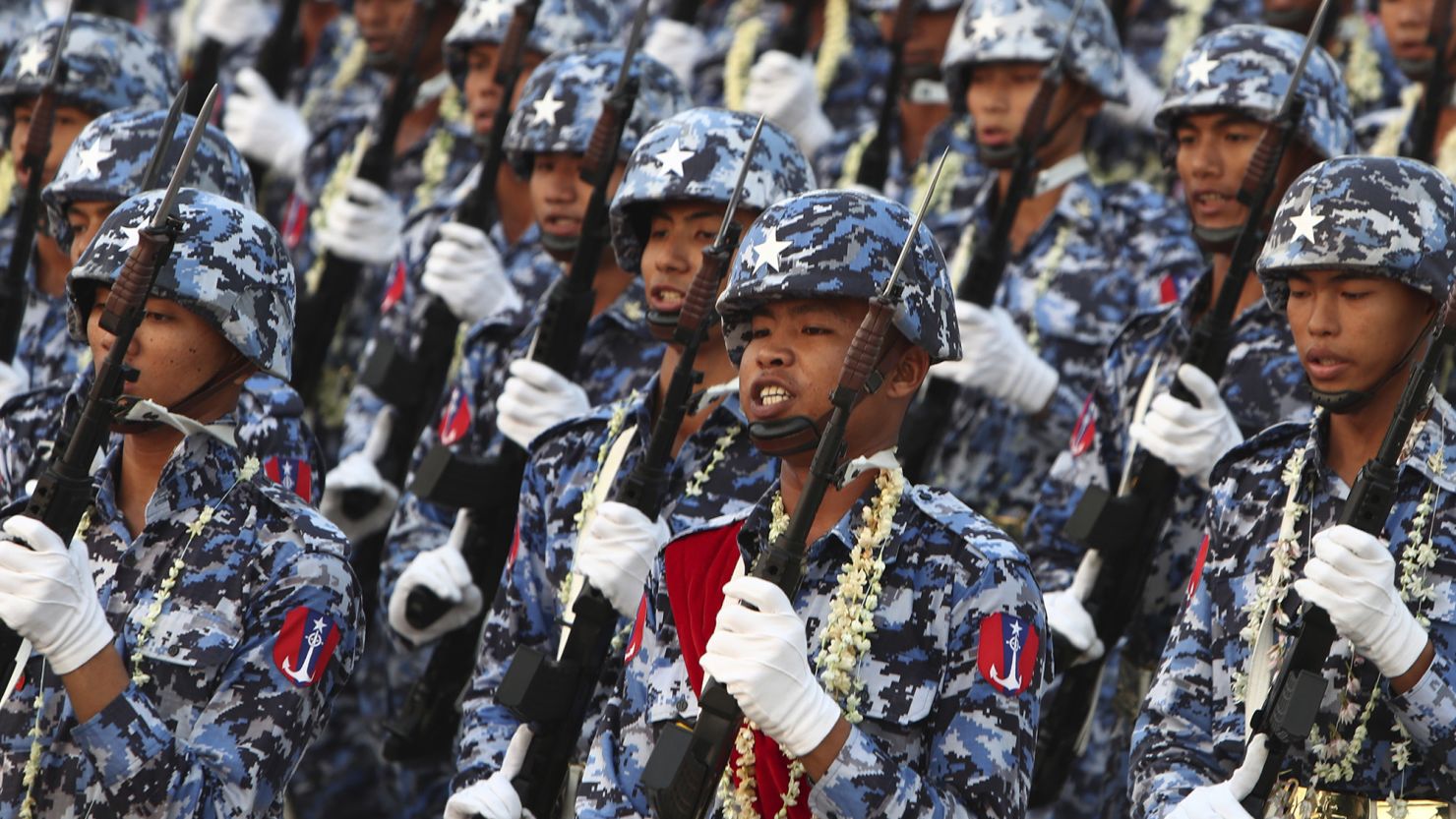
Myanmar 78th Armed Forces Day
“We don’t anticipate Myanmar returning (to ASEAN) right away. So that’s why we’re proposing that there’ll be a sort of calibrated re-engagement where we have benchmarks.”
Myanmar has been mired in instability since the 2021 overthrow of the elected civilian government led by Nobel laureate Aung San Suu Kyi. That coup triggered widespread pro-democracy protests, which later escalated into an expanding armed uprising that has seized control of large parts of the country.
Philippine Foreign Affairs Secretary Ma. Theresa Lazaro told a press conference following the ministerial retreat that several ASEAN members were still assessing the election results.
“It’s not an expression of support, but with a view that these elections might be something positive,” Lazaro said.
She added that ASEAN’s approach toward Myanmar continues to be guided by the bloc’s “five-point consensus,” which calls for an end to violence, dialogue among all relevant parties, and the delivery of humanitarian assistance.
While reiterating ASEAN’s demand for a free, fair, and inclusive election, Lazaro said that “even a certain compliance in the implementation of the Five-Point Consensus is something that will make things move.”
The Philippines has recently hosted discussions among opponents of Myanmar’s ruling junta in an effort to support dialogue and humanitarian efforts.
Lazaro also said Manila would work to finalize this year a long-delayed code of conduct for the South China Sea, a region where the Philippines and China have overlapping territorial claims.