
The United States is once again stepping into a central diplomatic role in the Russia-Ukraine war, with Ukrainian President Volodymyr Zelensky revealing that Washington is pressing for a potential resolution by June.
After a second round of U.S.-brokered talks, Zelensky confirmed that both Ukraine and Russia have been invited to negotiations on American soil, possibly in Miami, as early as next week.
If that happens, it would mark a historic moment: the first formal proposal to bring both sides of Europe’s bloodiest conflict since World War II directly to the United States for peace discussions.
For American readers, this isn’t just another foreign-policy headline. The war has already reshaped global energy markets, driven up food prices, strained alliances like NATO, and required tens of billions of U.S. taxpayer dollars in military and humanitarian assistance.
A ceasefire, or even a credible peace framework, by early summer would carry massive implications for U.S. households, global stability, and Washington’s standing on the world stage.
Below is a deeper look at what’s unfolding, why June matters so much, and how these developments could directly affect life in the United States.
According to Zelensky, the most recent discussions were hosted in Abu Dhabi. While they ended without a breakthrough, they introduced new ideas, most notably the possibility of a trilateral meeting between national leaders rather than continuing with lower-level negotiators.
Zelensky said the Americans are aiming to “do everything by June.” That timeline is no coincidence.
Back home, political pressure is mounting as lawmakers face voter frustration over continued spending overseas while Americans struggle with inflation, rising housing costs, and stubbornly high energy prices.
President Donald Trump, who returned to office more than a year ago, has repeatedly stated that he wants to bring the conflict to a close, framing it as both a humanitarian necessity and a strategic imperative for the United States.
Trump has publicly urged Moscow to pause attacks during periods of extreme cold. Russia briefly slowed its strikes, though Ukraine disputes how meaningful or long-lasting that pause actually was. For the White House, a June target offers a narrow but critical window to show tangible progress before the U.S. political calendar heats up again.
From Washington’s perspective, success here could help reframe America’s global role – from financier of an open-ended war to broker of a hard-won peace.
Despite renewed diplomatic energy, Zelensky has been clear-eyed about the obstacles ahead, especially when it comes to territory.
Ukraine continues to face pressure to consider concessions in regions occupied by Russia. Kyiv has consistently resisted these demands, arguing that surrendering land would legitimize aggression and set a dangerous precedent worldwide.
For Ukrainians, this war is existential. For Americans, it’s increasingly viewed through the dual lenses of geopolitical stability and fiscal responsibility.
Any potential leaders’ summit, possibly involving Russian President Vladimir Putin, would require extensive preparation. Trust between the sides is almost nonexistent, and battlefield realities still heavily shape negotiating positions.
Meanwhile, Russia has accused Ukraine of undermining peace efforts, with its foreign ministry alleging Kyiv was behind a recent high-profile attack inside Russia. Ukraine has not confirmed those claims. The mutual finger-pointing underscores just how fragile the path to peace remains.
Even if talks move forward in the U.S., no one expects quick or easy compromises.
While diplomats talk, missiles and drones continue to fly. Russia has intensified its campaign against Ukraine’s energy infrastructure, plunging cities into darkness during freezing winter conditions.
Substations, power lines, and thermal power plants have been repeatedly targeted, causing widespread blackouts and forcing residents to seek shelter in underground metro stations in Kyiv.
Ukraine’s state energy operator has reported a sharp rise in the national power deficit following recent strikes, prompting emergency electricity imports from neighboring countries like Poland.
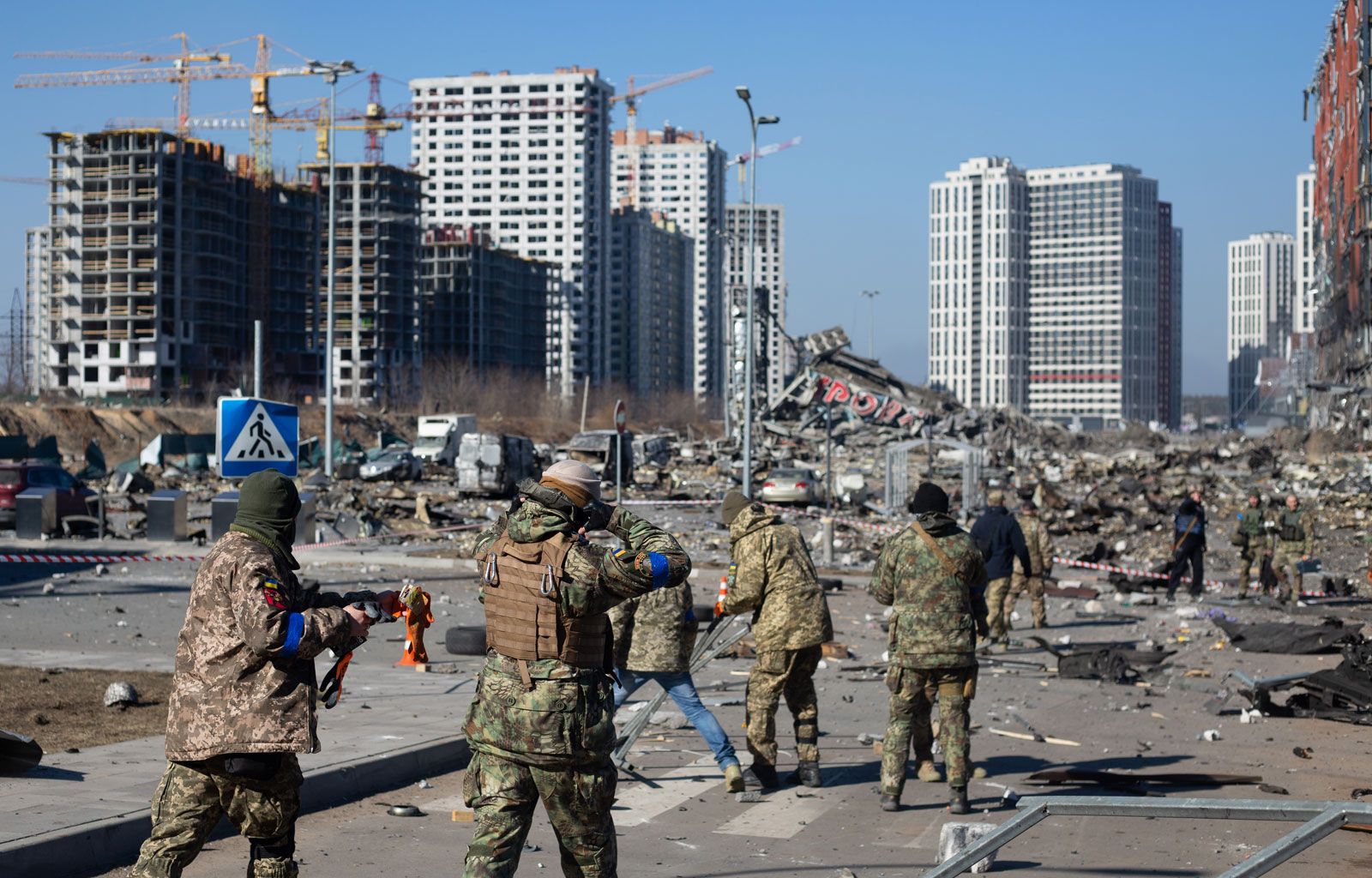
Russia-Ukraine War
Two major facilities, the Dobrotvir power plant near Lviv and the Burshtyn plant in Ivano-Frankivsk, were recently hit, leaving tens of thousands without power.
Private energy company DTEK says its thermal plants have been attacked more than 220 times since Russia’s full-scale invasion began in 2022, calling the latest barrage the most severe infrastructure blow so far this year.
For ordinary Ukrainians, the consequences are harsh and immediate. Families sleep on cold subway platforms. Businesses shut down during rolling outages.
Hospitals rely on backup generators. One Kyiv resident summed it up starkly: Russia is forcing people to live “without heating, without electricity.” It’s a humanitarian crisis layered atop an already devastating war.
Kyiv has confirmed strikes on a missile-fuel component factory in Russia’s Tver region and an oil depot in Saratov, signaling its growing ability to reach targets deep inside Russia.
Moscow has offered limited official comment, but the message is clear: the conflict is no longer confined to Ukrainian territory alone.
For U.S. policymakers, this escalation raises serious concerns about regional spillover. Every new strike carries the risk of retaliation, miscalculation, or involvement from additional countries—exactly the scenario Washington is trying to prevent.
A broader war in Eastern Europe would almost certainly mean higher energy prices, market volatility, and even tougher decisions for American leaders.
Zelensky recently stated that roughly 55,000 Ukrainian soldiers have been killed since February 2022. Independent estimates suggest nearly 160,000 Russian fighters have also lost their lives.
Behind those staggering numbers are millions of displaced civilians, shattered towns, and a generation growing up to the sound of air raid sirens.
For Americans watching from afar, these statistics can feel abstract. But the ripple effects are very real: higher gas prices, disrupted supply chains, and shifting global alliances. The U.S. has already committed extensive military aid to Ukraine, and while public support remains significant, signs of fatigue are growing.
Many voters are increasingly asking how long this level of involvement can continue. The June timeline carries enormous strategic weight in Washington.
A diplomatic breakthrough could allow the administration to present U.S. foreign policy as effective and decisive, easing pressure from critics who argue America is overextended abroad.
It could also help stabilize energy markets ahead of peak summer demand, offering potential relief to U.S. consumers at the gas pump.
At the same time, any agreement perceived as forcing Ukraine into unfavorable concessions could spark backlash from European allies and American lawmakers who see Kyiv as a frontline defender of democratic values.
Zelensky himself has acknowledged that U.S. domestic politics play a role in the urgency. With elections looming and congressional dynamics in flux, the window for bold diplomatic action may be closing.
In short, June represents more than a date, it’s a political, economic, and strategic inflection point.
For now, the prospect of talks on American soil offers a rare glimmer of hope. Bringing Ukrainian and Russian negotiators to the United States would symbolize Washington’s deep investment in shaping the outcome, and could provide neutral ground for face-to-face discussions that have been elusive for months.
Zelensky cautions that “preparatory elements are needed,” a reminder that peace cannot be rushed into existence.
The battlefield, the bargaining table, and the political arenas of multiple countries are tightly intertwined.
As winter attacks batter Ukraine’s power grid and civilians huddle underground, the world waits to see whether June will mark the beginning of the end or simply another chapter, in a war that has already reshaped modern geopolitics.
For the United States, the stakes could hardly be higher. Ending the conflict could ease economic pressures at home, reaffirm American leadership abroad, and spare countless lives. But achieving that outcome will require far more than deadlines and invitations.
It will demand difficult compromises, credible security guarantees, and a level of trust that has been in short supply since the first missiles flew nearly four years ago.
Whether Washington can help bridge that gap by early summer remains one of the most consequential questions of 2026.